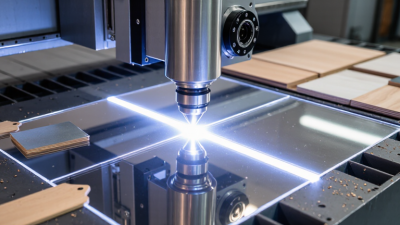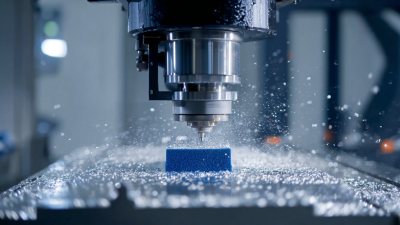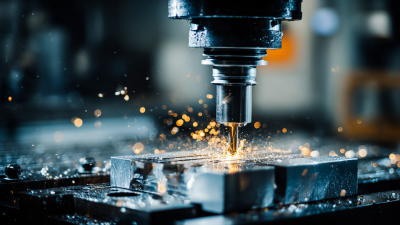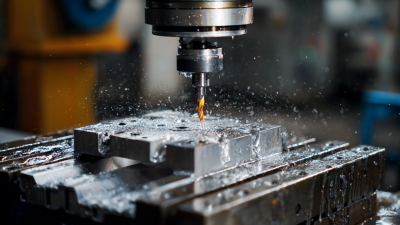

A plastic die cutting machine is a production system that shapes plastic sheets, films, foams, and laminated materials with a precision-made die. It applies controlled pressure to create repeatable forms, such as gaskets, labels, insulation parts, medical packaging components, and protective pads. The process may look simple. It is not.
John R. Henry, a die-cutting consultant and author, explains, “Die cutting is controlled deformation, not merely pressing a shape through material.” This observation highlights the machine’s real purpose. It must coordinate pressure, cutting speed, die condition, material tension, and waste removal. A small setup error can leave rough edges, incomplete cuts, or distorted parts. You can see the problem at the worktable: one corner separates cleanly, while another remains attached by a thin plastic thread.
A modern plastic die cutting machine may use flatbed, rotary, or platen-based technology. Its suitable design depends on material thickness, hardness, production volume, and dimensional tolerance. Operators also consider tool life and changeover time. These details matter in daily manufacturing. A machine that performs well on soft PVC may struggle with rigid PET or layered foam.
This guide explains how the equipment works, which components control accuracy, and where each machine type fits. It also examines practical limitations. No machine eliminates every production risk. Skilled setup still matters. Even reliable equipment can produce inconsistent results when the material changes, the die wears, or pressure is poorly balanced.
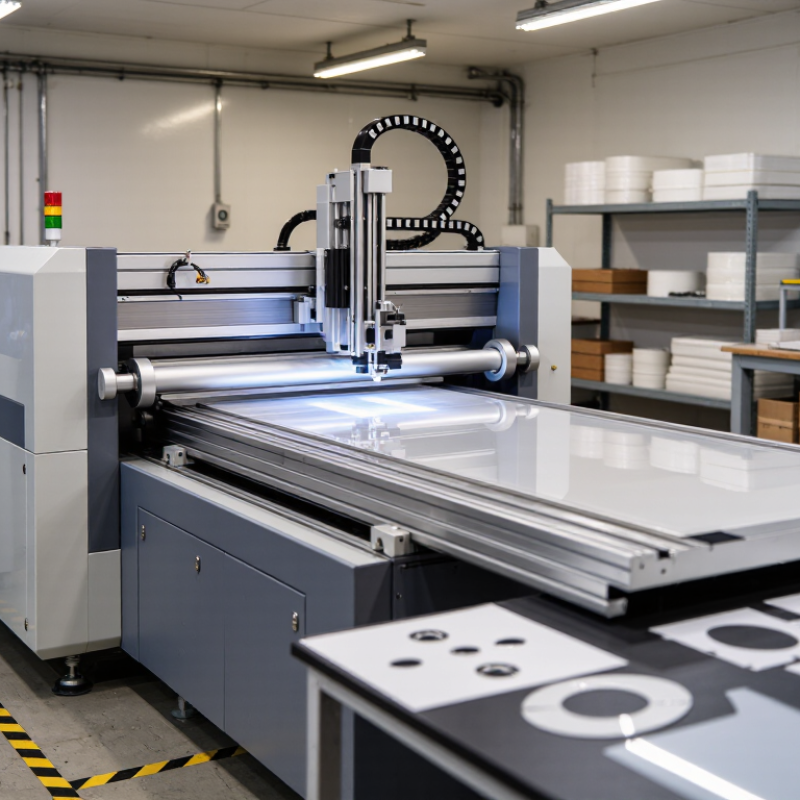
A plastic die cutting machine is industrial equipment that cuts, creases, or shapes plastic sheets and films with a prepared die. The die acts like a sharp steel template. Pressure pushes the material against it, creating repeatable parts such as gaskets, labels, insulation layers, seals, and packaging inserts. Some machines use flatbed tooling. Others use cylindrical rotary dies for continuous production.
Its main purpose is controlled conversion. It turns a large plastic roll or sheet into precise components with consistent edges and dimensions. Operators adjust pressure, speed, stripping, and registration. These settings matter when cutting thin PET film, polyethylene foam, or multilayer laminates.
A small alignment error can leave a visible offset around a tiny opening. That is where production experience becomes valuable. The machine is not fully automatic in practice.
Industry demand supports this role. PlasticsEurope reported global plastics production of about 413.8 million tonnes in 2023 in Plastics—The Fast Facts 2024. Much of this material enters packaging, electrical, medical, and industrial applications. Grand View Research estimated the global flexible plastic packaging market at about USD 167.7 billion in 2023, with continued growth forecast through 2030. These figures do not measure die cutting directly. They show the scale of materials requiring accurate converting.
A plastic die cutting machine can improve repeatability, reduce manual trimming, and limit material waste when tooling is correctly designed. Yet waste is not automatically low. Poor nesting, worn dies, and unsuitable pressure can create scrap quickly. The definition sounds simple, but real performance depends on material behavior, tooling quality, and operator judgment.
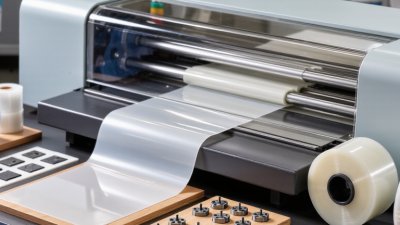
A plastic die cutting machine converts sheets, films, or thin molded parts into precise shapes. It uses controlled pressure to cut materials without removing chips. The machine may use a flatbed platen or a rotary cutting system, depending on production volume and material thickness.
The die is the working tool. Its sharp cutting rules follow the required outline, while creasing rules can form folding lines. A rigid die board holds these rules in position. The cutting platen applies force from above, and the base supports the plastic during each stroke. If pressure is uneven, one edge may cut cleanly while another remains attached. That problem is common during setup.
The feeding system moves material through the machine at a controlled speed. Registration sensors help align printed marks, holes, or previous cuts. A stripping station removes excess plastic, and a collection unit gathers finished pieces. Modern controls manage stroke depth, feeding distance, and cycle timing. Safety guards and emergency stops protect operators during movement.
Material behavior still requires practical judgment. Thin film can stretch, while rigid plastic may crack near sharp corners. In my experience, a small test run reveals more than a perfect-looking setup screen. Operators often adjust pressure by tiny increments. Even then, the first sample is rarely flawless. Temperature, tool wear, and material batches can change the result. Careful inspection remains essential.
A plastic die cutting machine shapes sheets, films, and laminated materials with a fixed cutting tool. The process begins when a roll or sheet enters the feeding unit. Rollers control tension and alignment. This detail matters because uneven tension can create distorted edges.
The die then presses against the plastic with controlled pressure. Through-cutting separates the entire part, while kiss-cutting removes only the top layer. Some machines also create holes, slots, creases, or perforations in one cycle. After cutting, a stripping station removes excess material, leaving parts on a carrier web. Cameras or sensors can check missing features and edge damage.
The material changes the settings. Thin polyethylene film may need gentle pressure and precise tension. Thicker polycarbonate sheets require greater force and slower feeding. According to European Bioplastics and nova-Institute’s 2023 market data, global bioplastics production capacity could rise from 2.18 million tonnes in 2023 to 7.43 million tonnes by 2028. That growth may increase demand for careful cutting trials, especially with unfamiliar films. PMMI’s 2023 State of the Industry report valued U.S. packaging machinery shipments at 11.3 billion dollars in 2022. Automation is expanding, but it does not remove practical judgment. Tool wear, heat, dust, and material memory still affect results. Sometimes, the first setup is wrong. Testing remains essential.
A plastic die cutting machine uses a shaped blade to cut plastic sheets, films, foams, and laminates. It can produce seals, labels, insulation pads, protective films, and packaging inserts. Common materials include polyethylene, polypropylene, polyester, PVC, polyurethane foam, and silicone-coated films. Material thickness, hardness, stretch, and surface coating affect cutting accuracy.
The OECD’s Global Plastics Outlook reported 353 million tonnes of plastic waste in 2019. This scale increases demand for efficient converting and material-saving processes. In practical production, rotary die cutting suits high-volume film and label work. Flatbed cutting works better for thicker sheets, prototype parts, and short production runs. A clean edge matters. Poor blade pressure may crush foam or deform soft polyethylene. Brittle plastic can also crack during stripping.
Tips: Test the material before selecting the blade. Check cut depth, liner release, heat sensitivity, and dimensional recovery. Keep a small sample from every trial. It can reveal problems that production data hides. The PlasticsEurope report Plastics—The Fast Facts 2024 recorded global plastics production of about 413.8 million tonnes in 2023, showing the scale of material conversion worldwide. Still, machine capacity alone does not guarantee quality. I have seen operators chase faster cycles while ignoring static, dust, and tool wear. That decision usually creates more waste, not more output.
| Plastic Material | Material Category | Typical Die-Cut Thickness | Common Products | Key Cutting Characteristics | Typical Applications |
|---|---|---|---|---|---|
| Polyethylene (PE) | Flexible thermoplastic | 0.05–6 mm | Gaskets, liners, protective films, packaging inserts, seals | Soft and flexible; low-density grades may require sharp dies and controlled material tension to prevent stretching. | Packaging, chemical handling, material protection, and general industrial sealing |
| Polypropylene (PP) | Semi-rigid thermoplastic | 0.1–3 mm | Folders, labels, spacers, packaging components, thin covers | Lightweight and fatigue-resistant; clean edges are achievable when the die clearance and blade condition are properly controlled. | Consumer packaging, stationery, automotive trim, and medical packaging |
| Polyvinyl Chloride (PVC) | Flexible or rigid thermoplastic | 0.1–5 mm | Gaskets, identification labels, insulation parts, cards, flexible seals | Available in soft and rigid grades; flexible PVC cuts well, while rigid PVC generally requires suitable tooling and dust control. | Electrical insulation, signage, construction products, and industrial sealing |
| Polyester (PET) | Rigid or flexible thermoplastic film | 0.05–1.5 mm | Insulating films, labels, overlays, precision shims, membrane parts | Good dimensional stability and tensile strength; suitable for detailed shapes and narrow tolerances in thin-film applications. | Electronics, electrical insulation, displays, labeling, and packaging |
| Polycarbonate (PC) | Rigid engineering thermoplastic | 0.2–3 mm | Protective windows, bezels, equipment panels, transparent covers | Strong and impact-resistant; thin sheets can be die cut, while thicker sections may need alternative machining methods. | Electronic housings, industrial equipment, lighting, and safety components |
| Polyurethane (PU) | Flexible elastomeric plastic | 0.2–10 mm | Seals, cushioning pads, vibration isolators, wear strips, protective covers | Highly elastic; compression during cutting and material recovery should be considered to maintain dimensional accuracy. | Automotive, machinery, footwear, medical devices, and protective equipment |
| Acrylic (PMMA) | Rigid transparent thermoplastic | 0.3–3 mm | Display components, transparent panels, light guides, decorative shapes | Provides good optical clarity; careful tooling and handling help reduce edge chipping and surface scratching. | Displays, lighting, retail fixtures, instruments, and signage |
| Nylon (PA) | Engineering thermoplastic | 0.2–3 mm | Washers, insulators, wear pads, flexible hinges, mechanical spacers | Strong and abrasion-resistant; moisture absorption can affect dimensions, so material conditioning may be required. | Mechanical assemblies, electrical components, transportation, and industrial equipment |
| PTFE | Low-friction fluoropolymer | 0.2–5 mm | Sealing rings, washers, slide pads, chemical-resistant gaskets | Very low friction and high chemical resistance; its softness and creep behavior require precise die design and handling. | Chemical processing, valves, pumps, laboratory equipment, and high-temperature sealing |
| Acetal (POM) | Rigid engineering thermoplastic | 0.5–3 mm | Spacers, washers, guides, clips, precision mechanical components | Low moisture absorption and good dimensional stability; best suited to relatively thin sheet and simple-to-moderate profiles. | Precision machinery, automotive systems, electronics, and fluid-handling equipment |
| Expanded Polyethylene Foam | Closed-cell foam plastic | 1–25 mm | Foam seals, cushioning pads, packaging inserts, edge protectors | Compressible and lightweight; die compression, cell structure, and recovery must be considered for consistent dimensions. | Protective packaging, HVAC, construction, automotive, and appliance assembly |
| Expanded Polyurethane Foam | Open-cell or semi-open-cell foam | 2–30 mm | Filters, acoustic pads, cushioning components, air-flow seals | Easy to shape with dies; porous structure can compress during cutting and may require support or a controlled cutting speed. | Filtration, sound absorption, furniture, medical products, and consumer equipment |
| Plastic Laminates | Multilayer plastic construction | 0.2–6 mm | Composite gaskets, insulation layers, protective overlays, printed panels | Cutting performance depends on the hardness, thickness, and bonding strength of each layer; delamination must be minimized. | Electronics, packaging, electrical insulation, appliances, and industrial assemblies |
What Is a Plastic Die Cutting Machine?
A plastic die cutting machine uses a shaped blade to cut, crease, or perforate plastic sheets and films. Unlike a simple knife, it applies controlled pressure across a defined outline. In production, operators use flatbed machines for rigid sheets, rotary machines for continuous rolls, and digital cutters for short runs or frequent design changes. Each type behaves differently. Flatbed systems offer stable pressure. Rotary systems favor speed. Digital systems reduce tooling time.
These machines produce gaskets, labels, protective films, insulation parts, medical packaging components, and electronic spacers. Material thickness, hardness, stretch, and surface coating affect the cut. A film that cuts cleanly in a test may tear during high-speed feeding. That detail is often missed. Experienced technicians check edge quality, dimensional tolerance, waste removal, and heat buildup. They also inspect the blade after repeated cycles, because a dull edge can distort thin plastic.
Selection should start with the material and actual production volume. Confirm maximum sheet or web size, cutting force, stroke rate, tool-change needs, and compatible software. Ask for sample trials using your own plastic, not an easy sample. Review guarding, emergency stops, noise, maintenance access, and operator training. Automation may improve consistency, but it can add setup complexity. A smaller machine may be wiser for variable orders. I would not choose by advertised speed alone; usable output depends on changeovers, rejects, and cleaning time.
Flatbed machines are commonly selected for short runs, thicker plastics, and frequent shape changes. Rotary machines are suited to high-volume production of thin films, labels, gaskets, and continuous webs. Laser systems are useful for prototypes, intricate geometries, and tooling-free production, although their speed and material compatibility depend on the plastic formulation and thickness. Selection should consider production volume, material thickness, dimensional tolerance, tooling cost, and shape complexity.