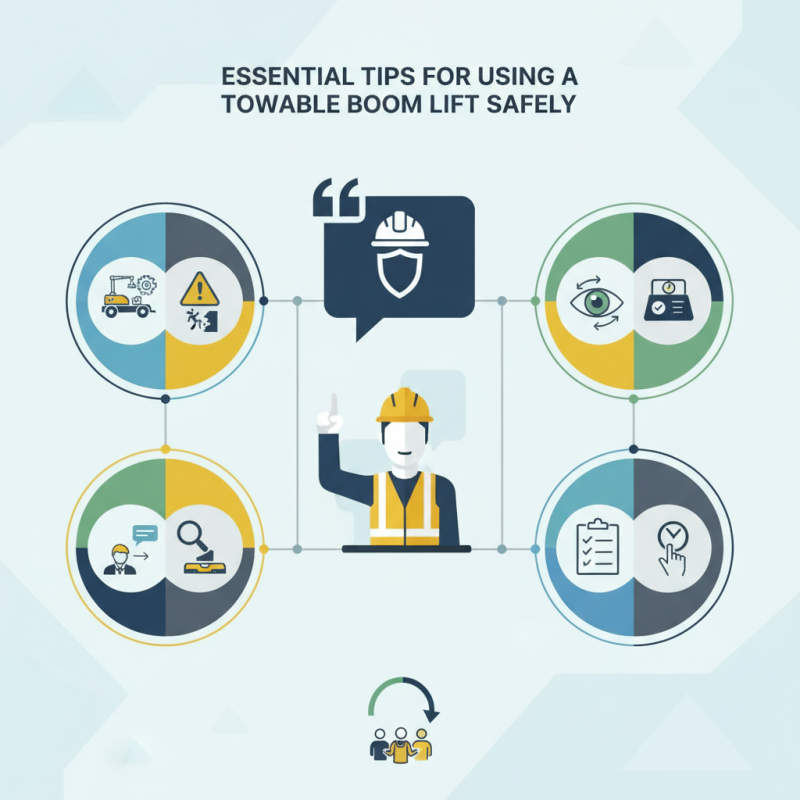
Essential Tips for Using a Towable Boom Lift Safely?
Using a Towable Boom Lift safely is crucial for both workers and project success. Industry expert John Smith, a certified safety trainer, emphasizes, "Safety should always be your top priority when using lifting equipment." His words highlight the core of safe operations.
Towable Boom Lifts provide mobility and accessibility for various tasks, but they come with their risks. Improper use can lead to accidents. Operators must be aware of their surroundings and the weight limits of the boom lift. Communication with team members is essential.
Many users overlook vital safety checks. Regular inspections can make a difference. Ensure that the lift is on stable ground before use. Understanding the controls is also key. Rushing can lead to mistakes. Each operation demands focus and attention to detail to prevent mishaps. Remember, safety is a shared responsibility.
Understanding the Components of a Towable Boom Lift
A towable boom lift comprises key components that work together for efficient operation. The base or chassis is crucial; it supports the entire unit and must be stable on various terrains. Check the wheel brake system for responsiveness. Ensure that the tires are properly inflated to avoid accidents.
Next, the boom itself extends to reach high places. It typically pivots to provide flexibility. Be aware: improper handling can lead to dangerous situations. The platform is where workers stand. Make sure it has a secure guardrail. It should be spacious enough for tools. However, overcrowding can compromise safety.
Lastly, maintain and inspect all components regularly. Look for wear and tear. Ignoring small issues can lead to significant problems. Once familiar with the parts, operators can use the lift safely and efficiently. Take time to understand each detail. It pays off in the long run.
Pre-Use Inspection Checklist for Towable Boom Lifts
When preparing to use a towable boom lift, conducting a thorough pre-use inspection is crucial. Start by checking the lift's tires. Ensure they are inflated and not damaged. Look for any cracks or debris that may affect performance. This step may seem minor, but tire condition significantly impacts stability.
Next, examine the boom and platform. Check for any visible damage, such as dents or rust. Inspect the hydraulic system for leaks. Any small leak can lead to larger issues later. Remember, a well-maintained lift is a safer lift.
Here are some quick tips: Always wear a hard hat while operating. Keep your workspace clear of obstacles. Use proper harnesses and safety gear. It’s easy to overlook these details, but they are essential for safety. Reflect on a past experience when a small detail led to complications. Learning from those moments is vital for future operations.
Essential Tips for Using a Towable Boom Lift Safely - Pre-Use Inspection Checklist for Towable Boom Lifts
| Inspection Item | Description | Check Frequency | Status |
| Hydraulic System | Check for leaks and ensure all connections are secure. | Before each use | Good |
| Safety Harness | Ensure the harness is in good condition and properly fitted. | Before each use | Good |
| Outriggers | Inspect for damage and ensure they are fully extended. | Before each use | Good |
| Platform Controls | Verify all controls are functioning correctly. | Before each use | Good |
| Tires | Check for proper inflation and any visible damage. | Before each use | Good |
| Lighting | Ensure all lights are operational for visibility. | Before each use | Good |
Essential Safety Gear and Equipment for Operating Boom Lifts
When operating a towable boom lift, safety gear is crucial. A hard hat protects your head from falling debris. Wear safety glasses to shield your eyes from dust and particles. Gloves should be worn to ensure a firm grip on equipment. Steel-toed boots provide both comfort and protection for your feet.
Tips for safe operation include inspecting the equipment before each use. Check for any visible damage or malfunctioning parts. Make sure the boom lift is on stable ground. Understanding the lift's operating manual is essential. Watch out for power lines overhead, as they pose a serious danger.
Communication is key when working with a team. Always have a clear signal system. Ensure everyone knows their roles. Remember, working at height is risky. Take a moment to assess your surroundings before beginning. Safety starts with preparation and awareness.
Best Practices for Operating a Towable Boom Lift on Different Terrain
Operating a towable boom lift on different terrain requires special attention. Uneven surfaces pose significant risks. The ground should be stable and clear of debris. Inspect the area for potholes or soft soil that may compromise the lift's stability. Always deploy the stabilizers on solid ground. However, sometimes, finding a perfect spot is challenging.
Consider the slope of the terrain. On inclines, position the lift securely to prevent rolling. Know your limits and stay within them. If the lift feels unsteady, it’s wise to reassess your location. Familiarizing yourself with the lift's capabilities can prevent accidents.
Weather conditions also play a role. Heavy rain can make surfaces slick. Windy days are tricky, too. Reduced visibility can increase risks. Always check conditions before operating the lift. Take your time to ensure safety. Rushing can lead to costly mistakes. Reflecting on these factors can enhance safety awareness in every operation.
Emergency Procedures and Safety Protocols while Using Boom Lifts
When using a towable boom lift, safety should always come first. Familiarize yourself with emergency procedures before starting any work. Ensure that all operators have received proper training. Always check the lift for any signs of damage or malfunction. This can prevent accidents from occurring. Keep a first aid kit accessible on the ground.
During operation, maintain communication with your team. Use hand signals or two-way radios. If an emergency arises, stay calm. Focus on the task at hand. If you experience mechanical failure, try to lower the lift slowly. This may help avoid a fall. Remember, not every situation is straightforward. You may need to think quickly.
Have a plan in case of an unforeseen event. Inform everyone involved about it. Everyone should know where the emergency procedures are posted. This knowledge could save lives. Boom lifts are useful tools, but they can be dangerous. Reflect on your experiences regularly to improve safety protocols. Look out for each other. Safety is a shared responsibility.