



Ports, flood defenses, rail corridors, and deep excavations increasingly depend on reliable temporary and permanent retaining systems. Steel Sheet Piles remain valuable because they combine high bending strength, rapid installation, and potential reuse. The World Steel Association reported global crude steel production of about 1.89 billion tonnes in 2023. That scale reflects a mature supply chain, but it does not guarantee consistent sheet pile quality.
Demand is also shaped by infrastructure pressure. The Global Infrastructure Hub has estimated a worldwide infrastructure investment gap of roughly 15 trillion dollars through 2040. More resilient waterfronts and transport projects will intensify supplier competition. Market reports from Grand View Research and Research and Markets indicate steady sheet pile growth, although their estimates differ because product categories and regions are defined differently. That difference deserves attention.
Steel is the backbone of modern civilization.
Lakshmi Mittal, Executive Chairman of ArcelorMittal, has used that phrase when describing steel’s wider industrial role. The same principle applies to sheet piles, where small manufacturing weaknesses can become visible on a crowded jobsite. A bent interlock, uneven coating, or delayed mill certificate may disrupt an entire installation sequence. This guide evaluates ten leading Steel Sheet Pile Manufacturer companies worldwide through production capacity, section range, steel grades, quality systems, sustainability progress, delivery reliability, and technical support. It is not a perfect ranking. Regional availability, project specifications, and contractor experience can change the result. Readers should verify current certifications, tolerances, and test records before making a procurement decision.
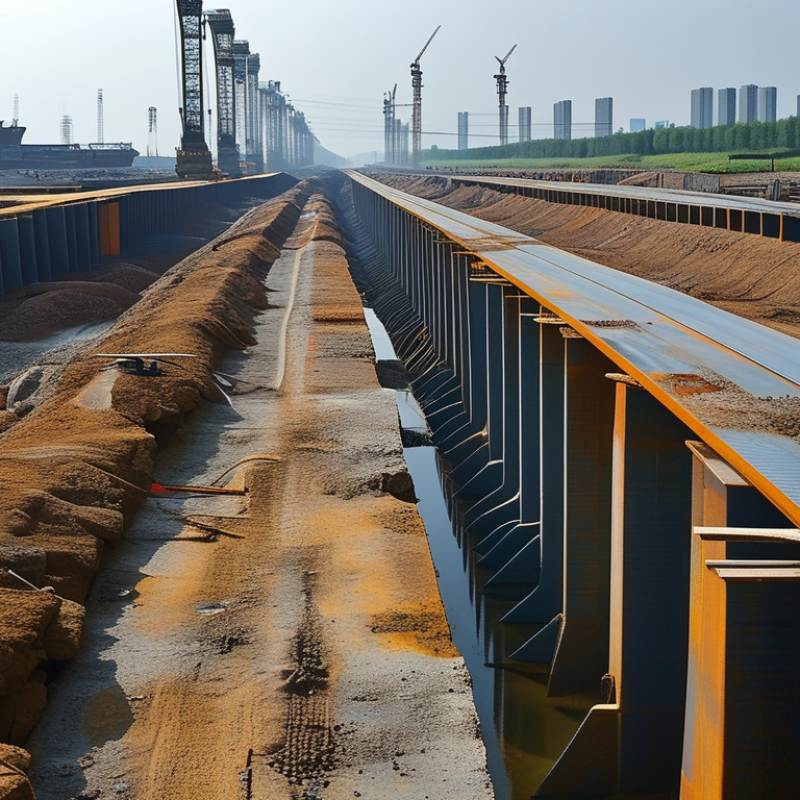
Steel Sheet Piles: Definition, Types, and Global Applications
Steel sheet piles are interlocking steel sections driven into soil to form continuous walls. They retain earth, control water, and support temporary excavations. Their interlocks create a practical barrier, while the embedded section transfers pressure into the ground. Engineers select pile length, thickness, and steel grade after reviewing soil data, groundwater levels, and loading conditions.
Common profiles include U-shaped and Z-shaped piles. U-piles offer flexible handling and useful section combinations. Z-piles provide efficient bending strength with less steel in many designs. Straight-web piles suit cellular structures and cofferdams, where tension across the interlocks matters. Hot-rolled piles usually provide stronger interlock performance, while cold-formed sections can support lighter applications. Global projects use them for ports, river walls, flood defenses, bridge foundations, and underground parking. Corrosion remains a concern in marine and industrial environments. Coatings, sacrificial thickness, and cathodic protection may extend service life.
Tips: Check mill certificates, interlock tolerances, and weldability before installation. Ask for independent testing when project risks are high. Driving records can reveal refusal layers, unexpected obstructions, or alignment problems. Small errors become expensive later. A corrosion allowance based on guesswork is not enough; local water chemistry and exposure time deserve measured attention. Some designs look efficient on paper but perform poorly when installation access is limited. Review lifting points, crane capacity, vibration limits, and nearby structures with the installation team.
| No. | Sheet Pile Type or System | Definition and Structural Form | Common Material Standards or Grades | Typical Global Applications | Main Engineering Advantages | Important Design Considerations | Representative Regions of Use |
|---|---|---|---|---|---|---|---|
| 1 | U-shaped hot-rolled sheet piles | Interlocking steel sections with a U-shaped cross-section. The neutral axis is generally close to the interlock, making the interlock condition important in structural design. | EN 10248 S270GP S355GP ASTM A572 Grade 50 | Temporary excavation support, cofferdams, riverbank protection, quay walls, flood barriers, and foundation works. | Efficient installation, broad availability, reusable sections, and good suitability for temporary and permanent retaining structures. | Interlock strength, corrosion allowance, driving energy, wall stiffness, and possible loss of section efficiency caused by interlock slip. | Europe, Asia, North America, South America, and marine construction markets worldwide. |
| 2 | Z-shaped hot-rolled sheet piles | Interlocking steel sections with a Z-shaped profile. The interlock is located near the outer fibers, which helps provide a high bending section modulus per unit mass. | EN 10248 S355GP S430GP ASTM A572 Grade 50 | Deep retaining walls, port structures, bridge approaches, flood defenses, and permanent earth-retaining systems. | High bending efficiency, strong wall stiffness, and favorable steel consumption for long and heavily loaded retaining walls. | Interlock shear transfer, connection integrity, driving resistance, corrosion exposure, and wall alignment during installation. | North America, Europe, East Asia, the Middle East, and major international port projects. |
| 3 | Straight-web sheet piles | Flat or nearly flat steel sections with interlocks at the edges. They are commonly used where tensile interlock forces and cellular construction are more important than bending capacity. | EN 10248 S270GP S355GP | Circular cells, diaphragm-type cells, breakwaters, temporary isolation structures, and special marine retaining systems. | Strong interlock engagement for cellular structures and suitability for forming circular or diaphragm-shaped walls. | Lower bending efficiency than many U- and Z-shaped profiles; cell geometry, hoop tension, and interlock tensile capacity require careful checking. | European marine works, Asian ports, coastal infrastructure, and specialized heavy civil projects. |
| 4 | Cold-formed sheet piles | Sheet piles manufactured by cold forming steel strip or plate into interlocking profiles. They are often selected for lighter retaining applications and site-specific dimensions. | EN 10249 ASTM A572 ASTM A690 | Small excavations, landscaping, flood control, light bulkheads, utility trenches, and temporary construction support. | Flexible production, competitive weight for light-duty applications, and suitability for shorter lengths or customized profiles. | Forming tolerances, local buckling, corner strength, interlock performance, and lower suitability for severe driving or heavy marine loading. | Europe, North America, Australia, and light civil construction markets in Asia. |
| 5 | Combined wall systems | A high-capacity retaining system formed by primary elements, such as large tubular piles or king piles, connected with secondary sheet piles. | EN 10248 EN 10219 S355 S420 | Deep-water quay walls, heavy-duty berths, container terminals, large cofferdams, and structures exposed to high lateral loads. | High bending capacity, long retained heights, efficient load distribution, and strong performance in demanding marine environments. | Connection design, differential driving behavior, pile verticality, corrosion protection, and installation sequencing. | Major ports in Europe, Asia, North America, the Middle East, and Oceania. |
| 6 | Temporary excavation sheet piles | Steel sheet pile walls installed for the duration of construction and removed or cut off after the permanent works are completed. | EN 10248 S270GP S355GP ASTM A572 | Basements, subway stations, pipelines, bridge foundations, utility corridors, and open-cut excavations. | Fast installation, water reduction when interlocks are reasonably tight, reuse potential, and relatively compact site footprint. | Ground vibration, noise, nearby structures, groundwater pressure, extraction feasibility, and residual deformation after removal. | Urban construction markets worldwide, particularly Europe, North America, and East Asia. |
| 7 | Permanent quay-wall sheet piles | Sheet pile walls designed to remain in service as the primary retaining and sometimes load-bearing element of a waterfront structure. | EN 10248 S355GP S430GP ASTM A690 | Harbor walls, wharves, jetties, ferry terminals, inland waterway facilities, and industrial waterfronts. | High construction speed, reduced excavation compared with some gravity structures, and adaptability to variable water depths. | Marine corrosion, tidal zones, cathodic protection, anchorage, scour, seismic loading, and long-term inspection requirements. | Coastal and inland ports across Europe, Asia-Pacific, the Americas, Africa, and the Middle East. |
| 8 | Flood-defense sheet pile walls | Interlocking steel walls used to reduce seepage, retain flood embankments, or form barriers against temporary or permanent water levels. | EN 10248 S355GP ASTM A572 ASTM A690 | River embankments, levees, storm-surge barriers, pumping stations, drainage channels, and coastal resilience projects. | Small construction footprint, rapid deployment, effective cutoff function, and compatibility with staged flood-protection upgrades. | Hydraulic gradients, seepage paths, overtopping, scour protection, corrosion, and exposure to debris impact. | Western Europe, North America, Japan, Southeast Asia, and low-lying coastal regions worldwide. |
| 9 | Seismic and high-strength sheet piles | Sheet pile systems using higher-strength steel or enhanced section capacity for projects exposed to significant lateral, cyclic, or earthquake-related demands. | S430GP S550GP ASTM A690 ASTM A572 Grade 65 | Seismic ports, bridge abutments, deep excavations, landslide stabilization, and infrastructure in high-hazard zones. | Higher yield strength, improved resistance-to-weight ratio, and potential reduction in wall thickness or overall steel tonnage. | Ductility, low-cycle fatigue, weldability, interlock behavior under cyclic loading, and compatibility with local seismic codes. | Japan, the west coast of North America, New Zealand, Turkey, Chile, Indonesia, and other seismic regions. |
| 10 | Corrosion-resistant marine sheet piles | Steel sheet piles selected or protected for long-term exposure to seawater, splash zones, tidal action, polluted water, or aggressive soil conditions. | ASTM A690 EN 10248 S355GP Coated or protected steel | Coastal defenses, offshore support facilities, marine terminals, seawalls, shipyards, and industrial waterfront structures. | Improved durability planning through suitable steel selection, coatings, cathodic protection, and designed corrosion allowances. | Corrosion rate assessment, coating damage during driving, tidal and splash-zone detailing, weld protection, and inspection access. | Global coastal markets, including Northern Europe, East Asia, the Gulf region, North America, and Australia. |