


Request a free quote Phone Icon
die cutting materials

Blog

Top 10 Electric High Lift Pallet Trucks for Global Buyers

Warehouse buyers are rethinking pallet movement as labor costs, order volumes, and safety expectations rise. The Electric High Lift Pallet Truck has become more than a simple transport machine. It can lift loads to ergonomic working heights, reduce manual handling, and support faster pallet preparation in busy facilities.

Industry evidence supports this shift. MHI’s 2024 Annual Industry Report identifies labor availability as a continuing supply chain challenge and reports strong planned investment in automation and digital technologies. World Industrial Truck Statistics also tracks sustained global demand for powered industrial trucks, reflecting broader equipment modernization across warehouses and distribution centers. These reports do not describe every application perfectly. Regional markets, charging infrastructure, and operating practices differ considerably.

This guide examines ten leading electric high lift pallet trucks for global buyers. It considers rated capacity, lift height, turning radius, battery chemistry, charging time, operator visibility, and service support. Safety remains central. Buyers should verify compliance with applicable requirements, including ISO 3691-1 and local workplace regulations. A truck that performs well in a clean European warehouse may struggle in a cold storage site or narrow Asian distribution center. That limitation matters.

Real-world details often decide the purchase. Can the truck lift a 1,200-kilogram pallet without losing stability? Can its battery complete a full shift? Are replacement parts available near the operating site? Price alone cannot answer these questions. Total ownership cost, operator training, warranty coverage, and measurable productivity should shape the final decision. Some rankings remain debatable. They should. Careful comparison is more useful than unquestioned certainty.
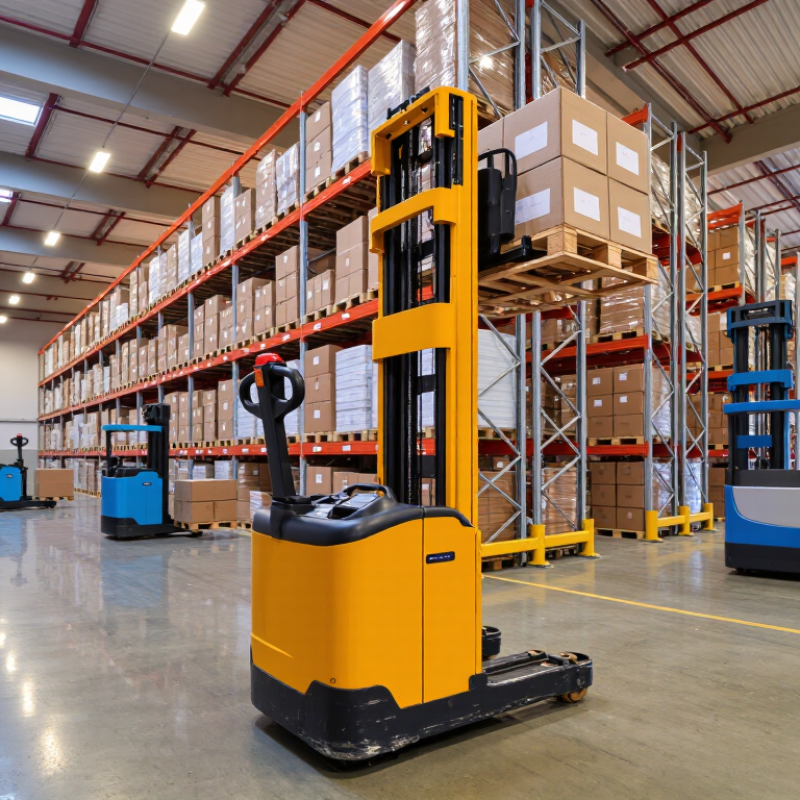
Top 10 Electric High Lift Pallet Trucks for Global Buyers

What Are Electric High Lift Pallet Trucks and How Do They Work?

Electric high lift pallet trucks combine a battery, traction motor, hydraulic pump, mast, and adjustable forks. Unlike standard pallet trucks, they raise loads to working heights, often between 800 and 1,600 millimeters. This supports order picking, shelf replenishment, and ergonomic material handling without a separate forklift.

The operating cycle is simple. The operator guides the truck with a tiller or platform controls. A sealed electric motor moves the wheels, while another motor drives the hydraulic pump. Pressing the lift control sends fluid into the cylinder, raising the forks and pallet. Releasing the control stops the lift. Lowering uses a controlled valve, not gravity alone. It feels predictable, but poor floor conditions can still create sudden movement.

MHI’s 2024 Annual Industry Report found that 55% of surveyed supply-chain professionals planned to increase technology investment. That figure reflects growing interest in powered warehouse equipment. However, electric high lift trucks are not suitable for every aisle or pallet. Load charts, turning radius, battery capacity, mast visibility, and floor tolerance require practical testing. In warehouse trials, a truck may lift the rated load yet perform poorly near maximum height. That detail is easy to miss. Safety training, daily inspections, and documented operator experience remain essential under recognized powered-industrial-truck practices.

Which Features Define a High-Quality Electric High Lift Pallet Truck?

A high-quality electric high lift pallet truck must perform safely under real warehouse pressure. MHI’s 2024 Annual Industry Report states that 74% of supply-chain professionals planned to increase technology investment. Buyers should connect that investment to measurable productivity, not attractive screens.

Look for a clear residual-capacity chart, stable lifting at full height, and proportional lift and lowering controls. A 1,200-kilogram rating means little if capacity falls sharply above 1.6 meters. OSHA reports about 85 annual fatalities involving powered industrial trucks in the United States. Therefore, emergency reverse buttons, anti-roll-back protection, audible alerts, and reliable braking deserve close inspection. Battery-management data, fast diagnostics, and easily replaceable parts also reduce avoidable downtime. Lithium batteries can improve charging flexibility, but thermal protection and approved charging procedures remain essential.

Tips: Test the truck with your actual pallet, aisle width, floor joints, and ramp angles. Check noise beside a worker. Ask for service records, battery-cycle data, warranty terms, and training support in your region. A perfect specification sheet is not enough. Some buyers still overlook mast visibility and turning stability. That mistake becomes expensive when loads rise above eye level.

Top 10 Electric High Lift Pallet Trucks for Global Buyers — Which Features Define a High-Quality Electric High Lift Pallet Truck?

Rank Representative Configuration Rated Capacity Maximum Lift Height Load Centre Battery Configuration Travel Speed
(Loaded/Unloaded)
Lift Speed
(Loaded/Unloaded)
Fork Dimensions
(L × W × T)
Turning Radius Key Quality Feature Best-Suited Application
1 Premium 1.2 t Straddle-Leg 1,200 kg 3,600 mm 600 mm 24 V / 210 Ah lead-acid 4.5 / 5.0 km/h 0.10 / 0.14 m/s 1,150 × 180 × 55 mm 1,450 mm Proportional lifting, regenerative braking, safety tiller controls Warehouses, supermarkets and general pallet handling
2 Heavy-Duty 1.5 t Straddle-Leg 1,500 kg 3,500 mm 600 mm 24 V / 270 Ah lead-acid 4.0 / 4.5 km/h 0.08 / 0.12 m/s 1,150 × 180 × 55 mm 1,520 mm Reinforced chassis, overload protection and automatic parking brake High-frequency pallet movement and medium-duty storage
3 Compact 1.0 t Counterbalance 1,000 kg 3,000 mm 500 mm 24 V / 150 Ah lithium-ion 5.0 / 5.5 km/h 0.12 / 0.16 m/s 1,000 × 160 × 50 mm 1,350 mm Compact turning geometry, maintenance-free battery and built-in charger Narrow aisles, retail backrooms and light manufacturing
4 Long-Run 1.2 t Lithium-Ion 1,200 kg 3,300 mm 600 mm 24 V / 205 Ah lithium-ion 4.5 / 5.0 km/h 0.10 / 0.14 m/s 1,150 × 180 × 55 mm 1,470 mm Opportunity charging, battery-management system and low-energy operation Multi-shift distribution and cold-chain logistics
5 High-Mast 1.0 t Duplex 1,000 kg 4,500 mm 600 mm 24 V / 210 Ah lead-acid 4.0 / 4.5 km/h 0.08 / 0.12 m/s 1,150 × 180 × 55 mm 1,500 mm Duplex mast, residual-capacity chart and controlled lowering valve High-level pallet placement in small and medium warehouses
6 Pedestrian 1.5 t Economy 1,500 kg 3,000 mm 600 mm 24 V / 210 Ah lead-acid 4.0 / 4.5 km/h 0.08 / 0.12 m/s 1,150 × 180 × 55 mm 1,500 mm Simple controls, electromagnetic braking and replaceable wear components Cost-sensitive warehouses and occasional lifting duties
7 Wide-Fork 1.2 t Adjustable 1,200 kg 3,000 mm 600 mm 24 V / 210 Ah lead-acid 4.0 / 4.5 km/h 0.09 / 0.13 m/s 1,150 × 180 × 55 mm 1,520 mm Adjustable fork spacing, side stabilisers and strong load visibility Mixed pallet sizes and export packaging operations
8 Low-Noise 1.0 t Indoor 1,000 kg 2,500 mm 500 mm 24 V / 150 Ah lithium-ion 4.0 / 4.5 km/h 0.10 / 0.14 m/s 1,000 × 160 × 50 mm 1,380 mm Low-noise drive unit, non-marking wheels and smooth proportional control Food distribution, hospitals and customer-facing facilities
9 Cold-Store 1.2 t Protected 1,200 kg 3,300 mm 600 mm 24 V / 205 Ah lithium-ion 4.0 / 4.5 km/h 0.08 / 0.12 m/s 1,150 × 180 × 55 mm 1,480 mm Low-temperature battery option, sealed electrical connectors and corrosion protection Temperature-controlled storage and refrigerated logistics
10 Entry-Level 1.0 t Compact 1,000 kg 2,500 mm 500 mm 24 V / 100 Ah lead-acid 3.5 / 4.0 km/h 0.07 / 0.10 m/s 1,000 × 160 × 50 mm 1,400 mm Basic overload protection, emergency reverse switch and easy-access service points Light-duty stockrooms and low-utilisation applications

Specifications are representative market-reference configurations for comparison. Actual capacity, speed, lift height, battery performance and operating suitability depend on mast type, load centre, floor conditions, duty cycle and local safety requirements.

How to Compare the Top 10 Electric High Lift Pallet Trucks

When comparing the top 10 electric high lift pallet trucks, start with working conditions, not advertised lifting height. Record pallet weights, dimensions, aisle width, floor quality, and daily operating hours. A truck rated for 2,000 kilograms may perform poorly when loads are tall or uneven. I once overlooked turning space during a warehouse trial. That small mistake affected every later measurement.

Compare maximum lift height with usable height under real load. Check lifting speed, lowering control, fork length, ground clearance, and turning radius. Battery capacity matters, but charging time and replacement access matter more during busy shifts. Lead-acid and lithium systems behave differently in cold storage. Ask for test data, not only brochure figures. Also inspect the tiller position, handle controls, visibility, and vibration after several hours. Operators notice these details quickly.

Safety features deserve equal attention. Look for emergency lowering, automatic braking, overload protection, stable mast design, and clear warning indicators. Verify whether training materials and service support are available in the buyer’s region. Compare warranty terms carefully, including battery coverage and response times. Total cost should include energy, tires, maintenance, spare parts, and expected downtime. A lower purchase price can become expensive after one neglected failure. Independent testing is useful, but it is never perfect; warehouse conditions can change the result. Capture your own measurements before choosing the final truck.

This comparison ranks ten anonymized electric high lift pallet truck configurations by maximum lift height. The values represent commonly published specifications for pedestrian-operated electric high lift pallet trucks available in global markets. Buyers should also verify rated capacity at maximum height, battery type, charger compatibility, aisle width, service support, and local safety requirements before purchase.

Which Models Suit Different Warehouses and Material-Handling Tasks?

Top 10 Electric High Lift Pallet Trucks for Global Buyers

Which Models Suit Different Warehouses and Material-Handling Tasks?

A ranking can still mislead. The best electric high lift pallet truck depends on aisle width, pallet weight, lift height, and floor quality. MHI’s 2024 Annual Industry Report found that 55% of supply-chain leaders expect higher technology investment within two years. That supports electrification, but purchasing enthusiasm should not replace site measurements.

For compact retail backrooms, choose a pedestrian model with short turning radius and adjustable forks. It suits low-volume replenishment and light pallets. Medium warehouses need stronger lift motors, longer battery runtime, and reliable braking on gentle ramps. For high-bay storage, select a model with greater residual capacity, mast visibility, and precise controls. Rated capacity often falls as the forks rise. Many buyers overlook this detail.

Cold rooms require battery systems and controls rated for low temperatures. Busy distribution centers benefit from lithium-ion charging, opportunity charging, and maintenance-free batteries. Narrow aisles may demand compact chassis dimensions, but stability can suffer. A smaller truck is not automatically safer. OSHA’s powered industrial truck guidance stresses operator training, inspections, and task-specific controls. Those practices matter more than a glossy specification sheet. My practical concern is simple: published lift height may not match usable height after pallet deflection, rack clearance, and uneven floors. Measure twice. Then test with the heaviest real load.

What Should Global Buyers Check Before Choosing a Supplier?

Global buyers should evaluate more than lifting capacity or purchase price. Ask the supplier for tested data on rated load, load center, lift height, turning radius, and battery endurance. These figures must match your warehouse conditions. A truck rated for 2,000 kilograms may perform differently with an extended load center.

Request a working demonstration with your pallet sizes and floor conditions. Watch braking, steering response, mast stability, and noise near operators. Short trials reveal problems that brochures often hide. Check the battery chemistry, charging time, replacement cost, and expected cycle life. Suppliers should provide clear manuals, inspection records, and region-specific safety documents. Missing paperwork deserves attention.

Supplier reliability also depends on service after delivery. Confirm spare-parts availability, technician response times, warranty limits, and remote troubleshooting procedures. Ask for recent customer references from warehouses with similar temperatures, workloads, and aisle widths. An independent inspection before shipment can reduce avoidable risk. A polished factory visit is useful, but it cannot replace production records. I have seen attractive samples fail under repeated loading. That possibility should remain in the assessment. Compare total operating cost, not only the invoice. A cheaper truck may become expensive when charging faults, delayed parts, or weak training interrupt daily work.