Request a free quote Phone Icon
die cutting materials

Blog

Top 10 Channel Magnets for Global Buyers in 2026?

Global buyers in 2026 need more than a strong magnet. They need dependable Channel Magnets that suit real working conditions. A warehouse may use them on steel racks, display frames, machine guards, or tool boards. Each location creates different demands. Surface thickness, load direction, vibration, heat, and moisture can change performance. This guide introduces the Top 10 Channel Magnets for Global Buyers in 2026. It focuses on practical selection, verified specifications, and safer purchasing decisions.

The ranking considers magnetic strength, housing quality, dimensional accuracy, corrosion resistance, and installation convenience. It also examines useful details, such as rubber coatings, countersunk holes, screw compatibility, and pull-force testing. Experienced buyers know that a larger magnet is not always better. A narrow channel magnet may fit a restricted rail, while a rubber-coated model may protect painted steel. Certification, traceable test data, packaging quality, and supplier communication also matter. Ask for evidence.

No single product serves every market. That is the difficult part. Temperature ratings may vary between suppliers, and advertised holding force often uses ideal laboratory steel. Real surfaces can be thinner, painted, curved, or dusty. Buyers should test samples under actual conditions before placing large orders. The following overview compares ten promising Channel Magnets through a balanced, evidence-based lens. Some rankings may change as product designs, materials, and international supply conditions develop. That uncertainty deserves attention, not polished promises.

Top 10 Channel Magnets for Global Buyers in 2026?

What Channel Magnets Are and Why Global Buyers Need Them in 2026

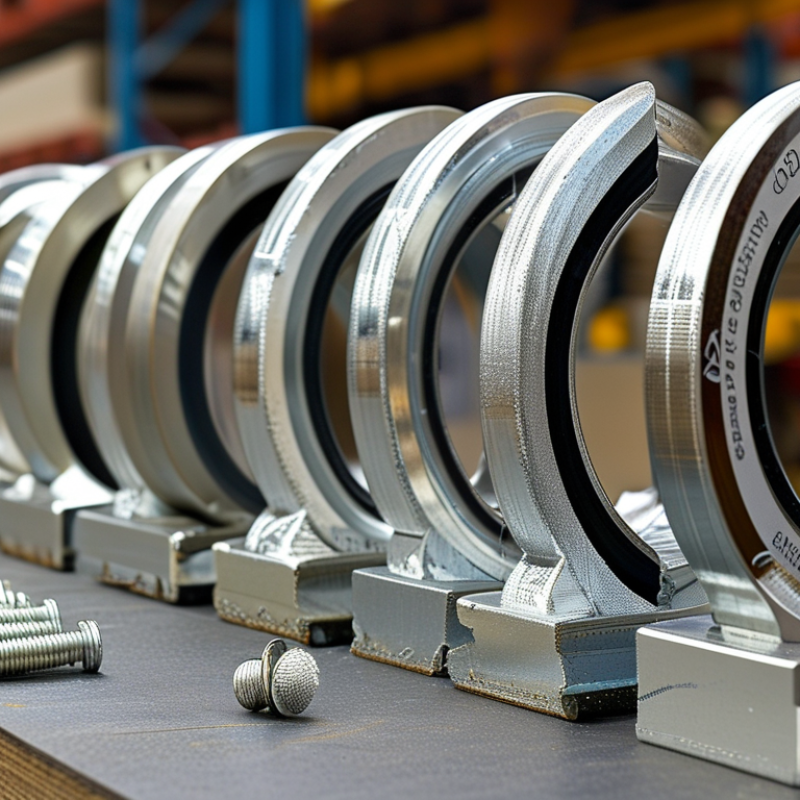
Channel magnets are permanent magnets fitted inside a protective steel channel. The channel focuses magnetic force toward one working surface. It also reduces chipping during handling and installation.

Global buyers need them in 2026 because modular displays, warehouse fixtures, access panels, and removable signs require secure attachment. A buyer may need a compact magnet for a 2-millimeter panel. Another may require stronger holding force for a metal frame. Dimensions, pull force, coating, temperature range, and surface finish must match the application. Small differences matter.

Reliable purchasing requires more than comparing catalog prices. Request measured pull-force data, material specifications, batch records, and clear packaging details. Samples should be tested with the actual panel thickness and contact surface. Painted steel can reduce performance. Dust can reduce it further. It happens.

Experienced buyers also check corrosion resistance for humid warehouses and coastal shipments. They confirm tolerances before approving large quantities. Independent inspection can reveal uneven magnet placement, weak bonding, or damaged channels. These defects are easy to miss in photographs. Suppliers should provide consistent documentation and traceable production information. However, certificates alone do not prove real-world performance. A practical trial remains necessary, especially when products cross climates, transport systems, and installation teams. Perfect specifications on paper may still fail during hurried assembly.

Top 10 Channel Magnets for Global Buyers in 2026

What channel magnets are and why global buyers need them in 2026: a practical comparison of widely used channel-magnet configurations, materials, performance ranges, and purchasing considerations.

Rank Channel Magnet Type Typical Size Range Magnet Material Typical Holding Force* Typical Maximum Working Temperature Common Applications Why Global Buyers Need It in 2026 Key Purchasing Check
1 Standard Neodymium Steel-Channel Magnet 20–100 mm long
10–50 mm wide
Neodymium–iron–boron magnet in a steel channel 10–120 kgf per piece 80°C standard grade Fixtures, signage, removable panels, warehouse labeling, light-duty mounting High force in a compact footprint supports space-efficient assemblies and lower material usage. Confirm pull-force testing method, steel contact thickness, air gap, corrosion protection, and working temperature.
2 Rubber-Coated Channel Magnet 25–120 mm long
12–60 mm wide
Neodymium or ferrite core with rubber or elastomer coating 5–80 kgf per piece 60–80°C, depending on coating Vehicle-mounted signs, painted surfaces, temporary fixtures, outdoor equipment Protects painted surfaces, improves grip, and reduces sliding and surface scratching during repeated use. Check coating hardness, UV resistance, oil resistance, salt-spray performance, and shear-load rating.
3 Countersunk Screw Channel Magnet 20–100 mm long
10–45 mm wide
Neodymium magnet in a steel channel with countersunk hole 15–100 kgf per piece 80°C standard grade Cabinet doors, machine guards, removable covers, modular displays Allows flush fastening and repeatable installation where a clean surface and mechanical retention are important. Match screw diameter, countersink angle, channel thickness, fastener material, and allowable tightening torque.
4 Threaded-Stud Channel Magnet 25–100 mm long
10–50 mm wide
Neodymium or ferrite magnet with integrated threaded stud 15–110 kgf per piece 80–150°C, depending on magnet grade Jigs, sensor mounts, advertising frames, temporary production fixtures Supports fast installation and removal without drilling the mounting surface, helping reduce labor and downtime. Verify thread standard, stud strength, torsional resistance, pull direction, and galvanic compatibility.
5 Ferrite Channel Magnet 30–150 mm long
15–70 mm wide
Hard ferrite ceramic magnet in a steel channel 3–35 kgf per piece 200–250°C typical ferrite range Industrial fixtures, low-cost closures, educational equipment, large-area holding systems Offers stable performance, good temperature resistance, and lower raw-material cost for less compact applications. Allow for the larger size required for equivalent force and check brittleness, edge protection, and dimensional tolerance.
6 High-Temperature Channel Magnet 25–120 mm long
12–60 mm wide
High-temperature neodymium or samarium–cobalt magnet 10–100 kgf per piece 120–250°C, depending on grade Ovens, heat-treatment equipment, industrial sensors, hot-process fixtures Maintains usable magnetic performance in elevated-temperature environments where standard neodymium magnets may lose force. Specify continuous temperature, peak temperature, exposure time, irreversible loss limit, and plating system.
7 Stainless-Steel Channel Magnet 20–100 mm long
10–50 mm wide
Neodymium or ferrite magnet enclosed in stainless steel 8–90 kgf per piece 80–200°C, depending on construction Food-processing areas, marine equipment, laboratories, washdown environments Improves resistance to moisture and cleaning chemicals when ordinary plated steel housings are unsuitable. Confirm stainless-steel grade, weld quality, sealing method, cleaning chemicals, and required hygiene certification.
8 Multi-Pole Channel Magnet 30–150 mm long
15–70 mm wide
Multiple magnet poles arranged inside a steel channel 10–100 kgf per piece 80°C standard grade Thin-sheet holding, alignment tools, magnetic clamps, display and assembly fixtures Provides a more concentrated magnetic field and improved holding on thinner ferrous surfaces than many single-pole designs. Request field distribution, holding-force curve, contact-surface requirements, and performance with the intended sheet thickness.
9 Flexible Rubber Channel Magnet 100–2,000 mm long
10–50 mm wide
Flexible magnetized rubber or polymer strip with a channel profile 0.2–8 kgf per 100 mm 60–90°C, depending on polymer Flexible closures, removable insect screens, light signs, partition systems, cable management Can follow curved surfaces and be supplied in long lengths, reducing cutting, joints, and installation time. Check bend radius, strip tolerance, adhesive or mechanical backing, aging resistance, and continuous-length availability.
10 Sealed Encapsulated Channel Magnet 20–120 mm long
10–60 mm wide
Neodymium or ferrite magnet fully enclosed in polymer, resin, or welded metal 5–90 kgf per piece 60–150°C, depending on sealing system Outdoor equipment, marine assemblies, washdown machinery, dust-sensitive installations Protects the magnetic element from moisture, dust, impact, and chemical exposure across demanding international supply chains. Review ingress protection, seal integrity, chemical compatibility, pressure resistance, and accelerated-aging test results.

*Holding-force values are indicative typical ranges measured under ideal direct-pull conditions against a clean, thick, low-carbon steel plate. Actual performance can be substantially lower with an air gap, thin steel, painted surfaces, stainless steel, shear loading, temperature, or uneven contact. Buyers should request a product drawing, material specification, test standard, and inspection report before placing a production order.

How the Top 10 Channel Magnets Are Evaluated

To evaluate the top ten channel magnets for global buyers in 2026, scoring must go beyond traffic. Each channel should be measured by qualified leads, buyer trust, conversion speed, and regional usability. The 2024 B2B Pulse report found that business buyers use an average of ten interaction channels during one purchasing journey. Therefore, a strong channel magnet must connect smoothly with search, social content, marketplaces, email, and direct sales.

Reach is only the starting point. The Digital 2025 Global Overview Report recorded more than 5.5 billion internet users worldwide, yet audience size does not guarantee commercial value. We examine mobile loading time, language accuracy, payment access, delivery visibility, and local customer support. A product demonstration that loads slowly in Nairobi or São Paulo loses practical influence. A clear return policy often creates more confidence than polished advertising.

Trust receives a separate score. Independent reviews, technical evidence, transparent pricing, and human responses can reveal whether attention becomes serious demand. We also test lead quality after thirty days, not only campaign clicks. This matters because early data can flatter weak channels. The framework is useful, but imperfect. Cultural nuance remains difficult to quantify. A channel may rank lower globally while performing exceptionally well in one region. Evaluation should therefore combine report data, controlled trials, buyer interviews, and repeated review.

The 10 Most Effective Channel Magnets for Global Buyers

The 10 Most Effective Channel Magnets for Global Buyers

Global buyers rarely follow one path. McKinsey’s 2024 B2B Pulse reports that buyers use an average of ten interaction channels. A strong channel magnet must therefore work across search, email, marketplaces, partners, and sales teams. Useful magnets include localized product pages, short technical videos, downloadable specifications, compliance summaries, landed-cost calculators, comparison sheets, verified case studies, sample-request forms, distributor toolkits, and post-purchase knowledge hubs. Each asset should answer one practical question quickly.

Localization matters more than translation. Buyers need local currencies, delivery estimates, measurement units, payment options, and clear service boundaries. DHL’s 2024 B2B E-Commerce Trends Report shows that cross-border selling is becoming a standard growth route for many B2B businesses. Yet unclear shipping terms still create hesitation. A calculator showing duties, delivery windows, and minimum order quantities can remove that friction. Keep forms short. Less than five fields works better in many early-stage journeys.

Trust signals should be specific. Show test methods, revision dates, warranty limits, and response times. Never hide uncertainty. One imperfect product video may feel more credible than polished claims without evidence. Search data, request quality, and regional conversion rates should be reviewed monthly. The weakest magnet may deserve revision, not removal. Global buyers notice when information looks copied, outdated, or translated without context.

How to Match Channel Magnets with Buyer Intent and Markets

Top 10 Channel Magnets for Global Buyers in 2026?

Matching channel magnets with buyer intent requires more than selecting the strongest grade. A retail buyer often wants compact disc, ring, or flexible sheet magnets, with clear packaging and simple specifications. An industrial distributor may need pot magnets, countersunk magnets, magnetic assemblies, or channel magnets for equipment integration. Search language reveals intent. “Bulk neodymium magnets” signals price comparison, while “corrosion-resistant magnetic assembly” suggests technical evaluation and longer qualification.

Market conditions also influence the product mix. The U.S. Geological Survey’s Mineral Commodity Summaries 2025 reported about 390,000 metric tons of global rare-earth mine production in 2024. China represented roughly 270,000 metric tons. The International Energy Agency’s Global Critical Minerals Outlook 2024 also identified China’s dominant role in refined magnet rare earths. Buyers therefore increasingly examine lead times, origin, coating options, and supply continuity. Ferrite magnets may suit cost-sensitive channels. Neodymium magnets fit compact, high-force applications. That distinction sounds obvious, but many product pages still ignore it.

Tips: Build separate landing pages for retail, OEM, and engineering buyers. Show pull force, dimensions, tolerance, coating, temperature range, and test conditions. Add realistic shipping ranges by market. Do not promise permanent availability. A small buffer stock can matter more than a dramatic strength claim. Review search terms quarterly; buyer intent changes faster than catalog teams expect.

How to Build a Cross-Border Channel Magnet Strategy for 2026

A cross-border channel magnet should earn attention before it asks for a sale. Build ten magnets: localized search pages, expert videos, buyer guides, trade directories, distributor portals, webinars, email sequences, messaging groups, marketplace listings, and customer referrals. Each channel needs local language, pricing clarity, delivery timelines, and visible compliance information.

DataReportal’s Digital 2025 report counted 5.56 billion internet users worldwide and 5.24 billion social media user identities. That reach is valuable, but broad visibility can waste budget. Segment audiences by import needs, product use, buying authority, and preferred communication channel. DHL’s 2024 E-Commerce Trends Report found that 57% of surveyed shoppers had purchased from another country. Trust must travel with the product. Show real warehouse photos, response times, product documents, and human contact details.

Our first pilot was too broad. That mistake still matters. A smaller test market exposed weak translations and unclear shipping costs. Track qualified inquiries, repeat visits, assisted conversions, and distributor acceptance, not clicks alone. Baymard Institute’s benchmark places average online cart abandonment near 70%, often reflecting friction rather than weak demand. Test one landing page, one offer, and one follow-up sequence per market. Review results every two weeks. Some channels will underperform. Keep them only when evidence explains why.

Top 10 Channel Magnets for Global Buyers in 2026

The 2026 Global Buyer Magnet Index ranks channel types by discovery reach, purchase intent, cross-border accessibility, localization potential, and measurement quality. Scores are normalized to 100 using publicly reported 2025 digital adoption and cross-border commerce benchmarks.

Search-led content and localized marketplaces lead because they capture high-intent demand. Short-form video, creator partnerships, and professional communities strengthen discovery, while email, messaging, webinars, and owned content help convert and retain international buyers. A practical 2026 strategy should combine one high-intent channel, one discovery channel, and one owned relationship channel for each priority market.