


China has become a significant sourcing base for engineered ceramic components, including nozzles used in spraying, cleaning, coating, and abrasive processing. This article introduces ten notable manufacturers associated with ceramic irregular nozzles. It focuses on practical selection, not promotional claims.
A reliable Ceramic Irregular Nozzle Manufacturer should demonstrate more than attractive pricing. Material grade matters. Alumina offers strong wear resistance, while zirconia can provide better toughness in demanding applications. The nozzle’s internal passage, outlet shape, wall thickness, and surface finish also influence spray consistency. Small dimensional errors may create uneven flow, pressure loss, or premature wear. That detail is easy to overlook.
The review considers manufacturing experience, customization ability, quality control, testing methods, and export communication. It also examines whether suppliers can provide drawings, samples, inspection reports, and clear production lead times. Factory capability matters, but responsive technical support matters too. A polished website proves little. Real evidence is stronger.
No ranking is perfect. Supplier performance may change with materials, equipment, staffing, and order volume. Buyers should verify current certifications and inspect samples before committing to large quantities. Questions about thermal shock, chemical exposure, operating pressure, and cleaning methods should be answered early. This guide offers a practical starting point for engineers, distributors, and procurement teams seeking dependable Chinese ceramic nozzle partners. Some manufacturers may suit high-volume production, while others may be better for complex prototypes. That distinction deserves careful attention.
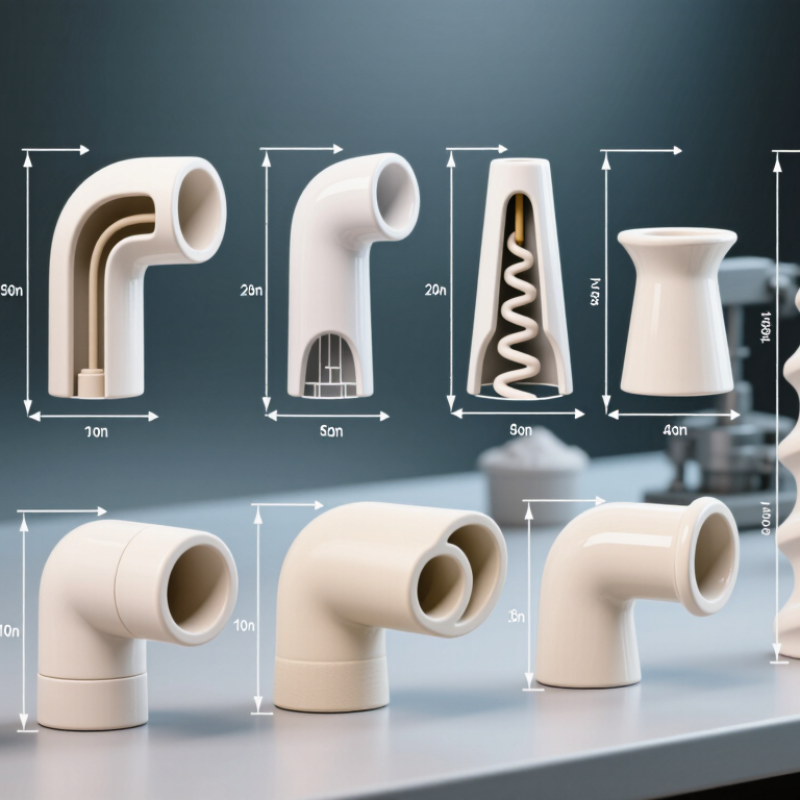
Ceramic irregular nozzles are engineered spray components with non-round openings or uneven internal channels. Their geometry changes the flow pattern, coverage width, and impact force. Unlike standard round nozzles, they can create fan-shaped, oval, slot-like, or multi-directional sprays. Dense technical ceramic resists abrasion, heat, and many corrosive liquids. However, it can crack under sudden impact or poor installation.
These nozzles are used in surface cleaning, mineral processing, kiln systems, chemical equipment, agricultural spraying, and dust suppression. Operators select them when a uniform circular jet is not suitable. For example, a wide slot nozzle can cover a conveyor surface with fewer units. In Chinese manufacturing, suppliers may produce custom openings through precision grinding, molding, or CNC finishing. Actual performance depends on pressure, liquid viscosity, particle size, and mounting accuracy. A drawing alone is not enough. Testing matters.
Tips: Confirm the spray angle, flow rate, ceramic grade, and connection size before ordering. Ask for dimensional inspection and pressure-test records. Examine the outlet under magnification; small chips can disturb the spray pattern. Ceramic parts usually last longer, but they are not indestructible. I have seen installation teams over-tighten fittings and damage otherwise reliable nozzles. This detail is easy to overlook. Benchmark samples under real operating conditions, because laboratory results may not reflect field wear.
Non-branded technical reference table for commonly manufactured ceramic irregular-nozzle categories in China
| No. | Ceramic Irregular Nozzle Category | Common Ceramic Material | Typical Irregular Geometry | Where It Is Used | Common Manufacturing Route | Relevant Performance Property | Selection Consideration |
|---|---|---|---|---|---|---|---|
| 1 | Spray-Drying Shaped Nozzle | Alumina Silicon carbide | Fan-shaped, oval, multi-channel, or custom outlet profile | Ceramic powder, detergent, food, pharmaceutical, and chemical spray-drying systems | Slip casting, pressing, CNC finishing, and precision firing | Wear resistance, thermal stability, and controlled spray distribution | The outlet profile must match the required spray pattern and slurry viscosity. |
| 2 | Abrasive-Blasting Ceramic Nozzle | Alumina Silicon carbide | Offset bore, flattened outlet, or non-circular internal passage | Surface cleaning, deburring, paint removal, and localized abrasive blasting | Isostatic pressing, sintering, diamond grinding, and bore finishing | High hardness and resistance to abrasive particle erosion | A harder ceramic generally extends service life, but the bore must be checked for uniform wear. |
| 3 | Thermal-Spray Powder Nozzle | Alumina Zirconia | Converging-diverging, angled, or multi-port powder outlet | Plasma spraying, flame spraying, and other thermal-spray coating equipment | Fine ceramic forming, high-temperature sintering, and precision machining | Heat resistance, dimensional stability, and smooth powder flow | Compatibility with the carrier gas, powder size, and torch temperature is essential. |
| 4 | Ceramic Burner Mixing Nozzle | Alumina Silicon carbide | Swirl slots, asymmetric flame ports, or multiple angled passages | Industrial kilns, furnaces, laboratory heating equipment, and combustion assemblies | Extrusion or pressing, kiln firing, drilling, and port calibration | Resistance to thermal shock, oxidation, and high-temperature corrosion | Port arrangement affects flame shape, mixing efficiency, pressure drop, and emissions. |
| 5 | Powder-Conveying Ceramic Nozzle | Alumina Silicon nitride | Elbow, Y-shaped, stepped, or internally blended passage | Pneumatic conveying of powders, minerals, pigments, and ceramic raw materials | Dry pressing, injection molding, sintering, and internal-bore grinding | Low particle adhesion, high wear resistance, and stable flow geometry | Avoid abrupt internal steps where powder accumulation or blockage could occur. |
| 6 | Glass-Forming Ceramic Nozzle | Alumina Zirconia | Slot, ribbon, slit, or shaped multi-opening outlet | Glass fiber, glass ribbon, frit, and molten-glass forming equipment | High-purity ceramic forming, controlled sintering, and precision slot machining | High-temperature stability, chemical resistance, and outlet uniformity | Material purity and thermal expansion must be compatible with the molten glass composition. |
| 7 | Textile and Fiber-Guide Nozzle | Alumina Zirconia | Oval eyelet, curved guide, slit, or multi-hole profile | Synthetic-fiber spinning, yarn texturing, filament guidance, and air-jet processing | Precision molding, sintering, diamond polishing, and surface lapping | Smooth surface finish, low friction, and resistance to fiber abrasion | The surface should be polished to prevent filament damage and unwanted fiber tension. |
| 8 | Chemical-Reactor Injection Nozzle | Alumina Silicon carbide | Tangential, radial, multi-hole, or angled injection design | Chemical processing, corrosive-liquid dosing, gas scrubbing, and reactor feed systems | Pressure forming, reaction sintering, CNC machining, and leak testing | Chemical resistance, temperature tolerance, and predictable flow distribution | The ceramic must be selected against the actual liquid, gas, concentration, and temperature. |
| 9 | High-Temperature Gas-Flow Nozzle | Silicon carbide Silicon nitride | Venturi, diffuser, converging, or asymmetric gas outlet | Heat-treatment furnaces, gas distribution systems, kiln atmosphere control, and testing equipment | Slip casting or pressing, high-temperature sintering, and precision bore finishing | Thermal-shock resistance, low deformation, and stable gas velocity | Gas velocity, pressure loss, and thermal gradients should be evaluated together. |
| 10 | Custom Multi-Channel Ceramic Nozzle | Alumina Zirconia Silicon carbide | Integrated liquid-gas, multi-fluid, branched, or application-specific passages | Specialized coating, cooling, atomizing, laboratory, and automated-process equipment | CIM, precision pressing, additive forming, CNC machining, and inspection | Customized flow control, wear resistance, and electrical or thermal insulation | A complete drawing should define tolerances, surface finish, flow rate, pressure, and test criteria. |