Top CNC Machine Laser Cutting Machine Advantages and Applications?
The CNC machine laser cutting machine has revolutionized modern manufacturing. Its precision and efficiency make it a top choice for various industries. This technology offers significant advantages, such as high accuracy and quick processing times.
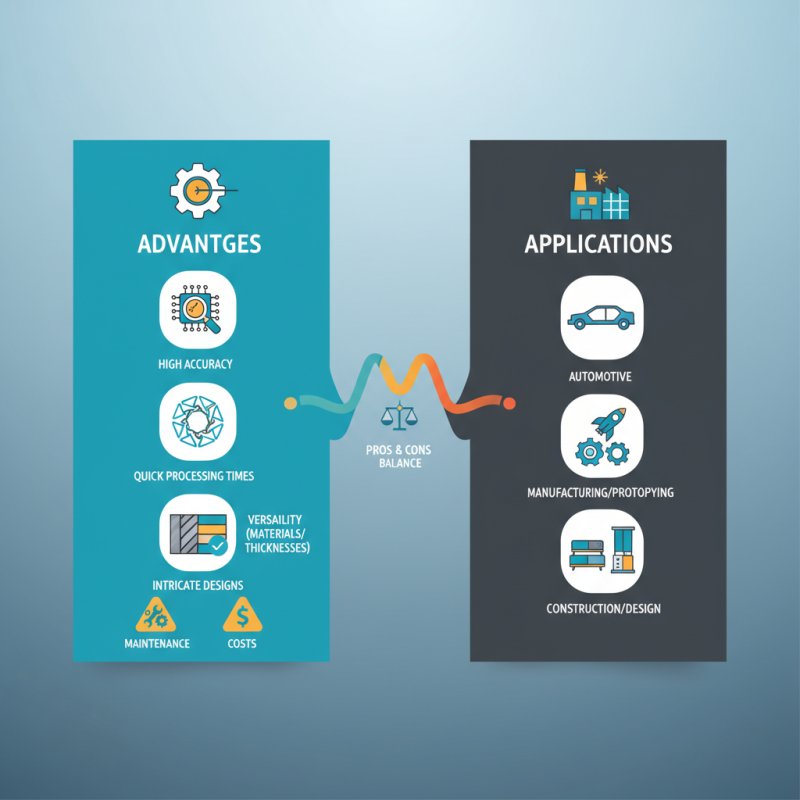
In applications ranging from automotive to aerospace, the CNC machine laser cutting machine stands out. It allows for intricate designs that traditional methods struggle to achieve. The versatility of this technology is impressive, accommodating different materials and thicknesses. Yet, it’s essential to recognize the challenges, like maintenance and costs.
While the benefits are clear, companies must evaluate their needs carefully. Investing in this technology should align with production goals. The advantages can lead to substantial gains, but potential drawbacks warrant consideration. This balance of pros and cons is crucial for successful implementation in any setting.
Understanding CNC Laser Cutting Machines: An Overview
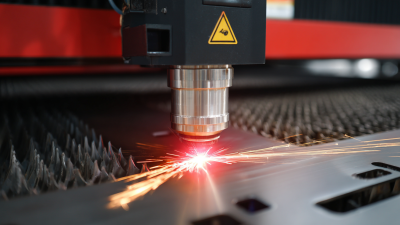
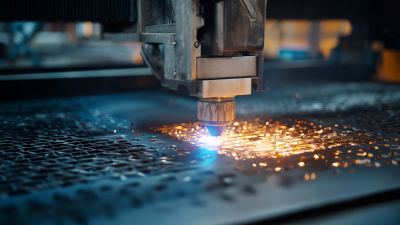
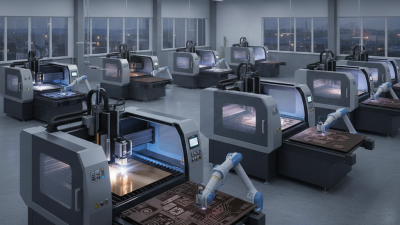
CNC laser cutting machines have transformed the manufacturing industry. They utilize focused laser beams to cut through materials like metal, plastic, and wood. Their precision is unmatched, allowing intricate designs to be achieved with ease. This technology reduces waste and increases efficiency, making it a favorite among fabricators.
One notable feature of CNC laser cutters is their versatility. They can handle various materials and thicknesses. This adaptability opens up opportunities for different applications. From signage to automotive parts, the possibilities are vast. However, there are challenges. Understanding material properties is crucial for optimal results. Improper settings can lead to inconsistent cuts, which can be frustrating for operators.
As the industry evolves, staying informed about advancements is essential. New software and hardware innovations can enhance capabilities. However, users should also reflect on their processes. Continuous improvement is key to maximizing the benefits of CNC laser cutting technology. Balancing innovation with practical skills can yield the best outcomes in production.
Key Advantages of CNC Laser Cutting Technology
CNC laser cutting technology offers significant advantages in various industries. One key benefit is precision. Laser cutting machines can achieve tolerances as tight as ±0.1 mm. This means less material waste and higher quality products. In fact, studies show that companies using CNC laser cutting technology can reduce scrap rates by up to 30%.
Another advantage is speed. These machines can cut through materials at speeds ranging from 1 to 30 meters per minute, depending on the thickness and type of material. This efficiency translates to better productivity and shorter lead times. A survey from industry experts indicated that firms adopting CNC laser cutting methods saw a 25% increase in production rates.
However, challenges remain. Not every material is suitable for laser cutting. Some thicker metals may require alternative methods. Laser systems also demand regular maintenance, increasing operational costs. Companies must balance these factors against the clear advantages. Proper evaluation is essential to fully utilize this technology. The potential is vast, yet many businesses are still navigating the learning curve.
Common Applications Across Various Industries
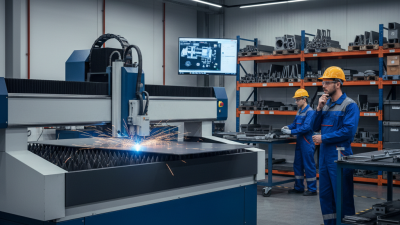
Laser cutting machines have revolutionized numerous industries by providing precise and efficient cutting solutions. In the automotive sector, they are widely used for cutting intricate parts. According to a 2023 industry report, laser cutting can achieve accuracy levels of 0.01 mm. This precision is crucial for maintaining vehicle safety standards. Additionally, manufacturers often find laser cutting reduces material waste by up to 30%. Such efficiency is attractive, especially in a world where resource conservation is paramount.
In the fabrication and construction sectors, laser cutting machines are employed for designing complex shapes in metals and plastics. The versatility allows for cuts in various thicknesses, a preference highlighted in industry surveys showing 40% of fabricators now use laser technology. Moreover, in the aerospace industry, the ability to cut lightweight materials like composites speeds up production times. However, the initial investment in laser cutting machines can be substantial. Many smaller businesses struggle to justify this cost despite the potential long-term benefits. The balance between upfront expense and future savings continues to challenge operators in today's competitive markets.
Comparative Analysis: CNC Laser Cutting vs. Traditional Methods
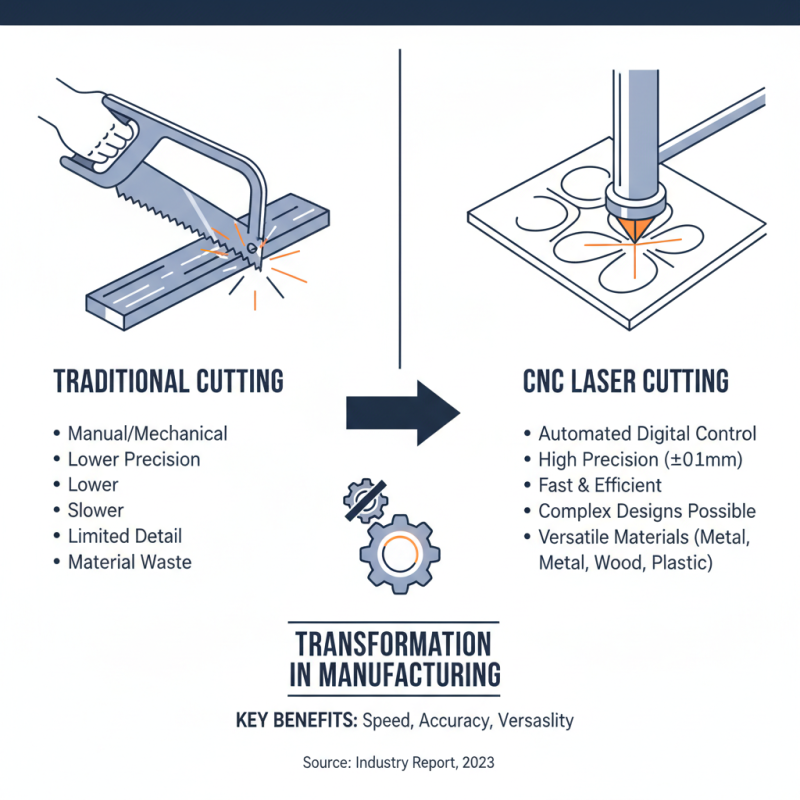
CNC laser cutting has transformed manufacturing. Compared to traditional cutting methods, it offers precision and efficiency. The ability to cut detailed designs is impressive. Lasers can handle various materials, like metal, wood, and plastic.
Traditional methods often struggle with intricate cuts. Sawing or punching may leave rough edges. The CNC laser, however, creates clean finishes. This reduces the need for additional processing. Time and costs are crucial in manufacturing. CNC laser cutting speeds up production significantly.
Yet, not everything is perfect. Initial setup costs for CNC laser machines can be high. Smaller businesses may find this challenging. Training personnel is also essential. Mistakes can happen, especially if users rush. Each method has its pros and cons. Evaluating needs carefully can guide the choice.
Future Trends in CNC Laser Cutting Machine Technology
CNC laser cutting machines are evolving rapidly,
setting the stage for future innovations. As industries strive for efficiency, the demand for versatile
cutting techniques rises. New technology enhances precision. Yet, challenges remain in
integrating these advancements into existing workflows.
One of the promising trends is automation.
With automated systems, operators can achieve higher productivity. However, the initial setup can be
complicated. Training staff to adapt to new processes
is crucial. Many companies may overlook this step, leading to wasted potential.
Sustainability also plays a vital role in future trends.
Manufacturers are exploring eco-friendly materials and processes. The aim is to reduce waste and energy
consumption. While many welcome this shift, adapting machinery and practices requires investment and time.
Companies must reflect on their current operations and embrace change
if they wish to stay competitive in the evolving market.