How to Choose the Right Packing Machine for Your Business?
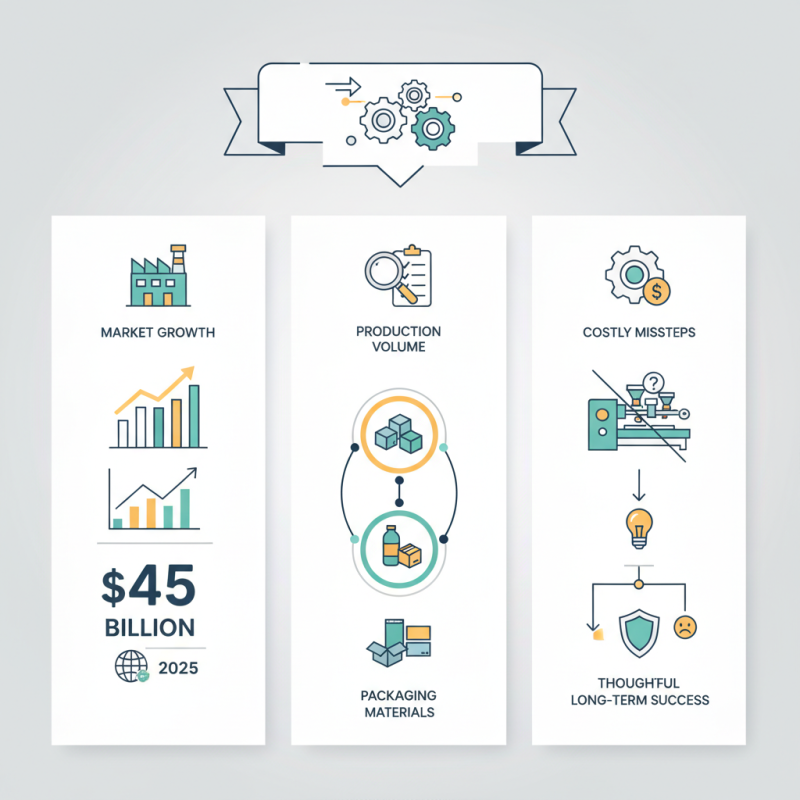
Choosing the right Packing Machine is crucial for optimizing efficiency and ensuring product safety. According to a recent report by the Packaging Machinery Manufacturers Institute, the global packing machine market is expected to reach $45 billion by 2025. This reveals strong growth and competition in the sector. Industry expert Dr. Emily Johnson notes, “Selecting the right packing machine can significantly impact production speed and overall costs.”
With various options available, businesses must assess their specific needs carefully. Factors such as production volume, product type, and packaging materials play a vital role in this decision. Many companies overlook these details, leading to costly missteps.
Investing in a packing machine without clear criteria can result in operational inefficiencies. In some cases, businesses find themselves underutilizing advanced features due to a lack of understanding. Thus, taking a thoughtful approach to selection is essential for long-term success.
Identifying Your Business Needs for Packing Machines
When selecting a packing machine, understanding your business needs is crucial. The type of products you handle significantly impacts your choice. Consider dimensions, weights, and fragility. For example, small, delicate items require different solutions than bulkier products. Assess the volume of goods you package daily. Higher volumes may need automated solutions, while smaller operations might benefit from manual machines.
Moreover, consider the layout of your workspace. Does your facility have enough space for large equipment? A compact machine might be necessary if space is limited. Think about future growth too. Will your packaging needs evolve? If your business is likely to expand, investing in a flexible machine can save you headaches later. It’s easy to overlook maintenance needs. Some machines demand more upkeep than others, impacting long-term costs.
Lastly, involve your team in the decision-making process. They often have hands-on experience and can provide valuable insights. Discuss the pros and cons as a group. It's essential to evaluate real-world scenarios, not just ideal situations. Unanticipated challenges may arise when machines are implemented. Failing to consider these factors could lead to inefficiencies and frustration down the line.
Understanding Different Types of Packing Machines Available
When selecting a packing machine, understanding the available types is crucial. There are various systems designed for different industries. For instance, vacuum sealers are great for perishable goods. They help extend shelf life by removing air. In contrast, automatic cartoning machines speed up packaging for larger items. Each serves a unique purpose.
For lighter products, consider a manual packaging machine. They can be cost-effective and easy to operate. Yet, they may not keep pace as your business grows. Think about your product volume. If you process large quantities, an automatic machine might be necessary. It could save time and labor costs.
**Tip:** Always assess the machine's speed and versatility. Can it adapt to different package sizes? This flexibility can be a game-changer.
Moreover, evaluate the space where the machine will fit. A common misstep is underestimating required space. Always measure twice before making a choice. This will prevent costly mistakes later.
Evaluating the Technical Specifications of Packing Machines
Choosing the right packing machine is no easy task. The technical specifications matter a lot. Start by examining the speed capabilities. How many packages can it handle per minute? Speed is crucial in meeting production goals. If the machine is too slow, it can lead to delays.
Next, focus on the size and weight of the materials you'll be packing. The machine should fit your product well. A misfit can result in damages or inefficiencies. Consider the dimensions carefully. Different machines have varying capabilities. Sometimes, a compact option may work better.
Also, think about the types of materials used. Are they fragile or sturdy? This will affect the choice of machine. You may find that the specifications look great on paper, but real-world performance could differ. Be prepared to adjust your expectations and re-evaluate your options. A test run could reveal potential issues.
Calculating ROI and Budget for Packing Machine Investment
When selecting a packing machine, calculating ROI (Return on Investment) is vital. Begin by assessing your production volume. Estimate how many products you package daily. This number directly influences the machine's size and speed. Smaller operations may not need high-capacity machines. Analyze if the expected output meets your business goals.
Budgeting for a packing machine requires careful consideration. Include additional costs like maintenance, training, and space. It’s easy to overlook these. Smaller budgets can limit options, but it’s essential to find value. Sometimes, cheaper machines will cost more in the long run due to repairs or inefficiency. Research total ownership costs.
Tips: Consider the flexibility of the machine. Will it adapt to future products? It’s best to review your needs for the next few years. Think about your team's comfort too. How easy is the machine to operate? It’s tough to factor in all variables, but doing so can save headaches later. Aim for machines that not only fit your current budget but also offer future growth potential.
Considering Space and Layout Constraints for Equipment Installation
When selecting a packing machine, space and layout are critical factors. Many businesses underestimate how much room the machine needs for operation and maintenance. According to industry reports, around 30% of packaging equipment failures stem from improper installation space. This can lead to costly downtime and inefficiencies.
Measure your available floor space accurately before making a decision. Consider how the machine will fit into your workflow. For instance, the need for easy access for repairs should not be overlooked. Some machines require a minimum clearance of three feet on all sides for effective operation. Ensure that your layout allows for smooth traffic flow, avoiding any bottlenecks.
Moreover, think about future growth. If your business expands, will your packing machine still fit? Upgrading often means rethinking your entire layout. Many companies face the challenge of outgrowing their initial setup. It is crucial to choose a machine that not only aligns with current needs but also adapts to future requirements. Balancing these considerations can be tricky, but it is essential for long-term success.