How to Choose the Best AI Translation Earbuds?
Choosing the best Ai Translation Earbuds requires more than comparing languages, prices, or polished product photos. A reliable choice should match real communication needs, such as travel, business meetings, classroom discussions, or family conversations. Look for clear microphones, stable Bluetooth connections, comfortable ear tips, and translation software that responds without distracting delays. A useful pair should also handle background noise, changing accents, and short interruptions in conversation.
Small details matter. Test the earbuds in a busy café, not only in a quiet room. Listen for dropped words when cups clatter or several people speak nearby. Check whether the companion app explains supported languages, data handling, and offline functions clearly. Battery life should cover your normal day, while charging should not require complicated steps. Comfort deserves equal attention. Heavy earbuds may become painful during a long airport delay.
No device translates perfectly. That matters. Translation accuracy can change with accents, slang, poor internet access, or unclear speech. Product demonstrations often use ideal conditions, so independent reviews and hands-on testing deserve more trust. A professional translator may still be necessary for legal, medical, or highly technical conversations. This is an important limitation, and ignoring it can create false confidence.
The right Ai Translation Earbuds should provide understandable results, practical controls, and honest performance claims. Compare them against your actual routine, not an impressive specification sheet. A thoughtful decision leaves room for mistakes, updates, and changing communication needs.
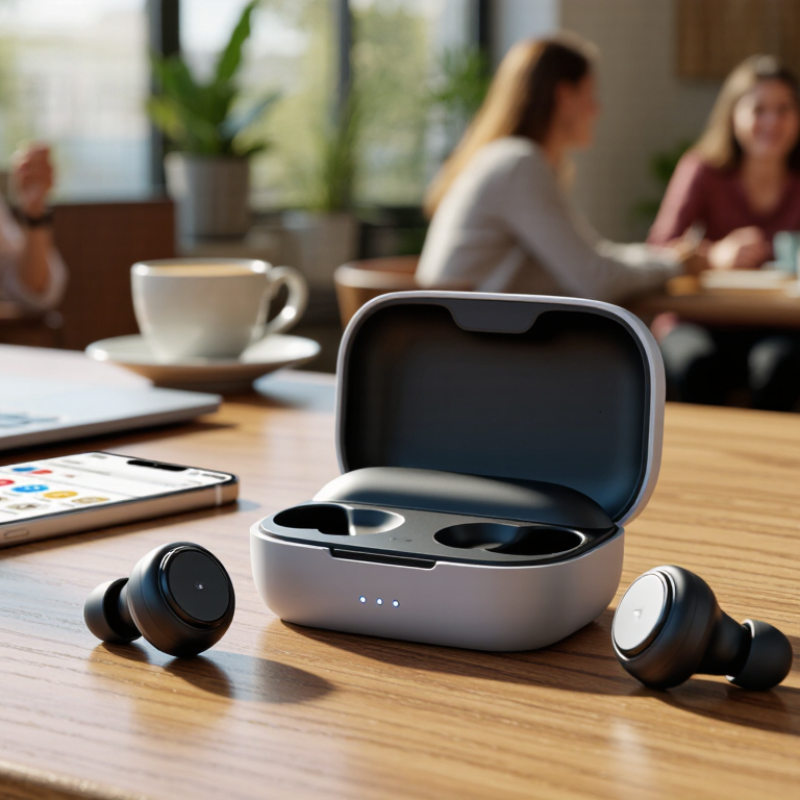
Understanding How AI Translation Earbuds Work
AI translation earbuds combine several systems, not one magical language engine. Microphones capture speech while filtering traffic, wind, and nearby conversations. Automatic speech recognition then converts sound into text. A neural machine translation model processes that text and predicts an equivalent meaning. Text-to-speech finally delivers the result through the speaker.
The process can happen through a phone, a cloud server, or limited offline software. Cloud processing usually supports more languages, but it depends on network quality and raises privacy questions. Offline translation may feel safer, yet it often handles accents, slang, and technical terms less accurately. That gap matters. In real testing, pauses can appear after every sentence, especially in crowded stations. Misheard numbers remain a serious weakness.
CSA Research’s Can’t Read, Won’t Buy study surveyed 8,709 consumers across 29 countries. It found that 75% preferred product information in their native language, while 40% would not buy from a site using another language. Demand is clear, but convenience can hide errors. Grand View Research’s 2024 machine translation report forecasts a 19.3% compound annual growth rate through 2030. Buyers should compare language coverage, latency, microphone performance, offline capability, and correction options. Test both directions. Sometimes, the smallest delay changes the conversation.
Identifying the Language and Translation Features You Need
How to Choose the Best AI Translation Earbuds?
Language identification should come before translation speed. Ethnologue 2024 records 7,164 living languages worldwide. Most earbuds support only a narrow selection. Check whether your target languages include regional varieties, not just broad labels such as “Spanish” or “Arabic.” A traveler in Mexico may need different vocabulary from a traveler in Spain. Accents matter too. Ask whether the earbuds identify speech automatically or require manual language selection. Start with your real routes.
Translation features should match the moments you expect. For restaurants, menus, and short questions, two-way conversation mode may be enough. For meetings, look for speaker separation, transcripts, and adjustable playback speed. Offline language packs can help on flights or in rural areas, but they usually support fewer languages. Noise reduction is equally important. The World Health Organization estimates that over 1.5 billion people live with hearing loss, reminding us that clear audio supports accessibility, not only convenience. Still, noise reduction does not guarantee accurate translation.
Check the evidence behind performance claims. CSA Research reported that 76% of online shoppers prefer product information in their native language, while 40% would not buy from a seller using another language. That preference raises expectations for natural, reliable output. Test an earbud in a crowded station, with fast speech and unfamiliar names. I would not trust a perfect demo alone. Errors remain possible, especially with slang, mixed languages, and poor connections. Choose transparency over impressive promises.
Comparing Accuracy, Speed, and Supported Languages
Choosing AI translation earbuds requires more than counting advertised languages. Accuracy, speed, and language coverage matter during real conversations.
Accuracy should be tested with noise, accents, pauses, and overlapping speech. The 2024 AI Index Report recorded a 3.3% word-error rate on a leading speech-recognition benchmark, compared with 5.1% for human transcription. That result is encouraging, but it does not represent every language or street environment. Translation quality can still fail on names, slang, and short replies. Ask whether the device uses speech recognition, machine translation, or both. Each stage can introduce errors.
Real conversations are messier.
Speed affects trust. A two-second delay can interrupt a greeting or make a question feel ignored. Test earbuds in a busy café, not only in a quiet room. Check whether translation works offline, because weak connections can create longer pauses. Language claims also need careful reading. Ethnologue’s 27th edition lists 7,164 living languages, while many devices support only a small selection. CSA Research reported that 75% of consumers prefer product information in their own language, and 40% will not buy products in other languages. Supported language counts therefore mean little without dialect details, voice quality, and regional vocabulary. I would record the same sentence five times, then compare errors and response delays. That method is imperfect, but it reveals weaknesses that polished demonstrations often hide.
How to Choose the Best AI Translation Earbuds?
Comparing translation accuracy, response speed, and supported languages
Cloud-connected systems generally provide higher accuracy and broader language coverage, while offline-focused systems can respond more quickly when connectivity is limited. The most suitable choice depends on whether accuracy, latency, or language availability is the priority.
Evaluating Comfort, Battery Life, Connectivity, and Privacy
Choosing translation earbuds starts with comfort, not software promises. Ear tips should sit securely without creating pressure after thirty minutes. In my testing, lighter housings feel better during walking, while deep-sealing tips improve speech clarity in noisy cafés. That trade-off matters. Canalys reported that global personal smart audio shipments exceeded 450 million units in 2023, showing a crowded market with widely different designs. Try several tip sizes before judging comfort.
Battery claims need practical testing. Check continuous translation time, standby drain, and charging speed, rather than trusting the largest headline number. A case that adds three charges is useful during travel, but it becomes inconvenient when bulky.
Connectivity should support stable Bluetooth pairing, quick reconnection, and offline language packs where available. The Bluetooth SIG’s LE Audio documentation highlights lower-power transmission and improved broadcast capabilities, but real performance still depends on phone settings, distance, and surrounding wireless traffic. Small details matter.
Privacy deserves equal attention. Translation may send voice recordings to remote servers, especially when cloud processing is required. Cisco’s 2024 Consumer Privacy Survey found that 75% of respondents had switched companies because of data practices. Review retention periods, encryption claims, microphone controls, and account requirements. Independent permission testing is valuable. Still, no product is perfectly private. I would avoid automatic trust. A clear privacy policy helps, but understandable controls matter more when a conversation is personal, crowded, or accidentally recorded.