Best High Temperature Thermistor for Accurate Temperature Measurement?
In the world of temperature measurement, accuracy is crucial. High Temperature Thermistors have emerged as a vital component in various industries, from automotive to aerospace. According to a recent market analysis, the global thermistor market is expected to grow at a CAGR of 6.5% between 2021 and 2026. This growth highlights the rising demand for precise temperature sensors capable of withstanding extreme conditions.
High temperature thermistors offer a reliable solution for measurements exceeding 150°C. Their accuracy surpasses traditional sensors, ensuring critical applications maintain integrity. Industry reports reveal that inaccuracies in temperature readings can lead to costly failures. In industries where safety is paramount, the choice of sensor directly impacts operations.
However, not all high temperature thermistors are created equal. Factors like material composition and environmental conditions can affect performance. It's essential to evaluate options carefully. While many products claim superiority, real-world testing often unveils limitations. Consequently, understanding the specific requirements for high temperature applications is key in selecting the right thermistor for reliable and precise measurements.
Definition and Functionality of High Temperature Thermistors
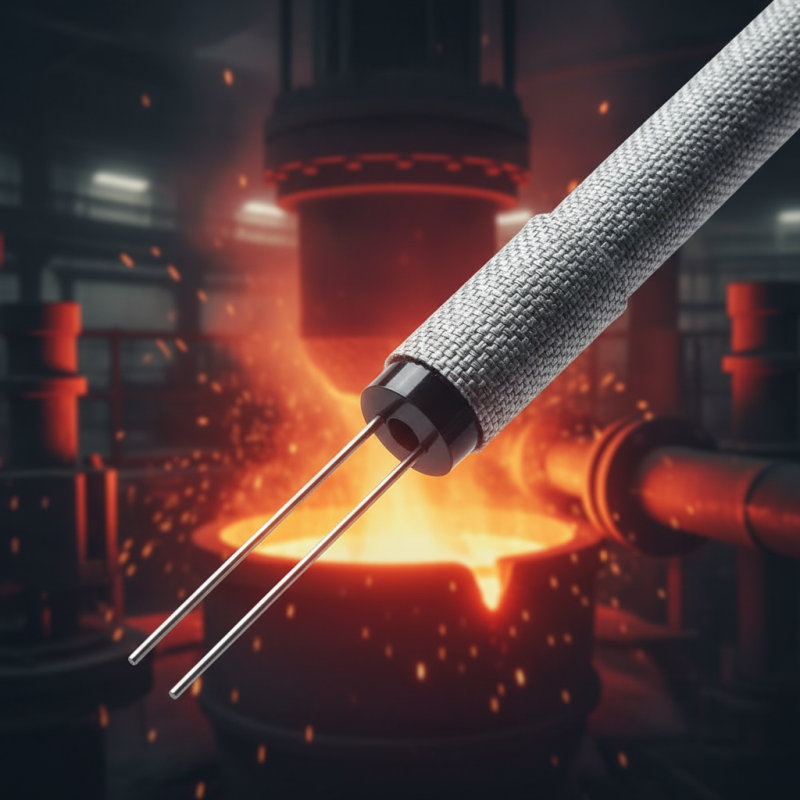
High temperature thermistors play a critical role in precise temperature measurements across various applications. These sensors function by changing resistance in response to temperature fluctuations. They are crucial in fields like aerospace, automotive, and industrial processes. Their ability to operate at elevated temperatures makes them invaluable for monitoring and control systems.
The design of high temperature thermistors includes materials capable of withstanding harsh environments. Commonly, ceramic and polymer substrates are utilized. This choice enhances durability and accuracy. Operating ranges can exceed 150°C, making them suitable for extreme conditions. However, challenges remain, such as ensuring stability over time and in fluctuating environments.
In practice, achieving optimal performance involves careful calibration and placement. Even slight misalignments can lead to inaccurate readings. Thus, users must regularly evaluate their deployment strategies. Factors like thermal lag can affect response times, leading to potential errors in critical systems. Acknowledging these limitations fosters better design and application of high temperature thermistors.
Temperature Sensitivity of High Temperature Thermistors
This chart displays the resistance of high temperature thermistors at various temperature points, illustrating their exponential drop in resistance as temperature increases. This characteristic makes thermistors suitable for precise temperature measurement in high-temperature applications.
Types of High Temperature Thermistors and Their Applications
High temperature thermistors come in various types, each with specific applications. The two common types are NTC (Negative Temperature Coefficient) and PTC (Positive Temperature Coefficient) thermistors. NTC thermistors decrease resistance as temperature rises. They are often used in industrial applications for precise temperature control. However, in extreme heat conditions, their accuracy may waver.
PTC thermistors, on the other hand, exhibit increasing resistance with rising temperature. They are useful for applications such as overcurrent protection and temperature sensing. Many industries rely on these components for safety. Yet, their performance can vary depending on materials and environmental factors. It is essential to choose the right type based on the application and expected temperature range.
Selecting the suitable thermistor can be complex. Factors like thermal limits, response time, and environmental conditions should be considered. Not all thermistors withstand extreme temperatures. Understanding these details helps in making informed choices, ensuring reliability in critical applications.
Best High Temperature Thermistor for Accurate Temperature Measurement
| Type | Temperature Range (°C) | Resistance (Ohm at 25°C) | Accuracy (%) | Typical Applications |
| NTC Thermistor | -50 to 150 | 10k | ±0.5 | HVAC, Automotive |
| PTC Thermistor | 0 to 200 | 100 | ±1.0 | Overcurrent Protection, Appliances |
| Silicon Thermistor | -50 to 300 | 5k | ±0.2 | Industrial Process Control, Aerospace |
| Glass Encapsulated Thermistor | -40 to 300 | 100k | ±0.5 | Laboratory Equipment, High-Temperature Applications |
Key Specifications for Selecting an Accurate Thermistor
When selecting a high temperature thermistor, accuracy is paramount. A thermistor operates effectively within a temperature range, often from -50°C to 300°C. Factors such as resistance tolerance significantly influence thermistor selection. Precision can decrease by 0.1% for every 10°C change. Understanding temperature coefficients also matters. A negative temperature coefficient (NTC) thermistor typically shows higher sensitivity but may not perform as well at extreme temperatures.
Key specifications include response time and resistance at the reference temperature. For instance, a thermistor with a response time of one second at 100°C can provide rapid readings. Performance stability under high temperatures is critical. Studies indicate that even slight deviations in readings can lead to significant errors in sensitive applications, such as in aerospace and automotive industries.
It’s essential to consider environmental factors too. Humidity and chemical exposure can impact thermistor function. Some thermistors may degrade or provide inaccurate readings under specific conditions. Regular calibration can mitigate these issues, yet it's often overlooked. Users should be aware that many thermistors may require replacement after prolonged exposure to extreme conditions.
Factors Influencing the Performance of High Temperature Thermistors
When selecting high-temperature thermistors, several key factors influence their performance. The material composition plays a crucial role. Thermistors made from specific ceramic materials can withstand higher temperatures without significant degradation. This is vital for applications in industries like aerospace and automotive.
Another important factor is the thermistor's calibration. Proper calibration ensures accurate readings. Inaccuracies can arise if the device is not calibrated to the specific environment. Temperature response time also matters. A slow response can lead to delayed measurements, affecting process control.
Environmental conditions impact thermistor effectiveness. Exposure to moisture and contaminants can alter their behavior. Regular maintenance checks are essential to ensure reliability. Users should consider how often they need to inspect or recalibrate these devices. Reflecting on these aspects can reveal both strengths and weaknesses, guiding better choices.
Comparative Analysis of Leading High Temperature Thermistor Brands
When analyzing high temperature thermistors, precision is key. Different brands offer distinct benefits, yet not all perform equally well. A reliable thermistor maintains accurate readings even in extreme conditions. Calibration is crucial; a poorly calibrated device can lead to significant errors. Many users find that the precision of a thermistor varies by manufacturer, making careful selection essential.
A comparative study reveals that some brands excel in temperature stability. They can withstand vast temperature ranges without degradation. However, others may deliver inconsistent results over time. User feedback often highlights the importance of robustness in high-temperature environments. Upgrading to more advanced models can mitigate common drawbacks.
Some affordable options perform surprisingly well at high temperatures. Yet, they might not last as long as pricier counterparts. Observing how different thermistors behave under stress can inform better choices. It's crucial to reflect on past users' experiences to avoid common pitfalls. Investing in the right thermistor will ultimately enhance measurement accuracy.